
Muhammad Rasool Al-Kilani 1*; Mohammad A. Okour 2; Qasem Abdelal 3; Khalid Bani-Melhem 4; Rami Abu-Mousa 2; Temitope Samuel Egbebiyi 5, 6
1, Department of Smart Irrigation and Agriculture, Faculty of Agriculture, Irbid National University, Irbid, Jordan
2, Department of Research and Development, Biotechnology Research Unit, Oula for Seeds Production Company, Mafraq, Jordan
3, Department of Civil & Environmental Engineering, School of Sustainable Systems and Engineering, German Jordanian University, Amman, Jordan
4, Center for Advanced Materials (CAM), Qatar University, P.O. Box 2713, Doha, Qatar
5, Department of Earth and Atmospheric Sciences, Cornell University, Ithaca, NY, USA
6, Climate System Analysis Group, Environmental and Geographical Science Department, University of Cape Town, South Africa
E-mail:
m.kilani@inu.edu.jo
Received: 14/04/2026
Acceptance: 01/08/2026
Available Online: 03/08/2026
Published: 01/01/2027

Manuscript link
http://dx.doi.org/10.30493/DAS.2026.010308
Abstract
The growing imperative for water conservation contrasts with a paucity of farm‑level data on the concomitant carbon implications of available management options. This work presents such insights from an agricultural compound with 30 operational plots in Mafraq, Jordan using sensor measurements, rainfall data, water use, and energy consumption information. The annual water consumption was 20,000m3 at a carbon footprint of 3.47 kg eCO2/m3. Smart irrigation corresponded to seasonal water savings of 30m3 per single plot of 100m2, based on how often irrigation exceeded soil field capacity. This scales to a net reduction of 5475.6 Kg eCO2 of the water carbon footprint across all plots, accounting also for imbodied carbon (0.09 Kg eCO2/m3) from the electronic and electrical components needed in smart irrigation. Water harvesting showed the least water saving potential (260.6 m3) due to the arid nature of the region, but also the lowest carbon footprint (0.03 Kg eCO2/m3) resulting from transportation to irrigation area. The feasibility of treated wastewater reuse at the site was constrained by the requisite ancillary infrastructure and the embedded carbon footprint of the treatment phase, rendering it less competitive relative to other available strategies. The results demonstrate how on-site techniques can have carbon-viable water savings, but managing crop water demand, like reduced evaporation, could result in much larger water-carbon reductions.
Keywords: Smart irrigation, Water conservation, Carbon footprint, Rainwater harvesting
Introduction
Climate change is expected to have significant impacts on agricultural production systems around the world, and rainfall variability may have the most direct impacts on crop yields [1]. Under these conditions, it is expected that a 20% increase in the fraction of irrigated lands is necessary to meet global food demand [2]. Researchers in vulnerable regions have largely focused on reducing the pressure on fresh water through exploring technological advancements in non-conventional water resources such as treated wastewater reuse and desalination [3][4]. Research efforts have also been directed towards improving monitoring of water resources and water accounting through novel techniques [5][6]. However, improving water use efficiency and reducing losses remains to be a priority, particularly in arid regions with scarce water resources [7]. In this context, agriculture is a major focal point as the largest global water consumer.
Over the past decade, studies have shown that smart irrigation systems, combining soil moisture sensing, weather-based scheduling, and data-driven control can significantly reduce agricultural water use while maintaining or enhancing productivity [8][9]. These technologies enable irrigation to be scheduled according to real-time crop needs, thereby minimizing overwatering, runoff, and evaporation losses [10]. A substantial body of research published over the past decade shows that smart irrigation can reduce water consumption by approximately 20–40% under typical field conditions, with higher savings; sometimes exceeding 50% achieved in optimized or water-scarce environments [11][12]. These gains are largely driven by the system’s ability to respond dynamically to changing environmental conditions, such as rainfall, temperature, and soil variability, which are often overlooked in traditional irrigation practices [12]. In addition to conserving water, smart irrigation can maintain or even improve crop yields by preventing both water stress and excess irrigation, leading to better overall water use efficiency. Early studies on sensor-based irrigation, with the integration of IoT and artificial intelligence, already showed notable improvements in water-use efficiency compared to conventional scheduling, particularly through reducing over-irrigation and matching application to crop demand, with typical water savings ranging from 20-40% under field conditions and reaching 30–50% in optimized or drought-prone environments [13]. Experimental and modelling studies highlight that real-time monitoring and adaptive control are key drivers of these gains, enabling systems to respond dynamically to soil moisture deficits, evapotranspiration, and weather variability [14]. Advanced approaches using machine learning, multi-sensor fusion, and predictive analytics have reported water savings of up to 30–50% compared to traditional irrigation, alongside improvements in water productivity and yield stability [15]. Also, other studies emphasize that smart irrigation reduces uncertainty in irrigation decision-making and minimizes losses due to runoff and deep percolation [16]. However, research has shown that actual savings are context-dependent, influenced by crop type, climate, soil properties, and system design. Overall, there is strong consensus that smart irrigation represents a critical technological pathway for enhancing water-use efficiency and supporting sustainable agriculture under increasing water scarcity and climate variability.
Extensive advancements and insights have been revealed on the role of different management systems in water conservation, such as wastewater treatment, water harvesting, and smart irrigation [17-19]. This also extended to life cycle analysis of these various options, revealing insights related to their carbon footprint and environmental impacts [20-23]. However, a knowledge gap remains on the tradeoff between these different systems. There have been no experimental works comparing the potential for these water conservation pathways on a single site, or across sites under similar conditions and management. Accordingly, this work explores the water conservation potential of smart irrigation compared to alternative water conservation options at an agricultural compound in a semi-arid region in Jordan. The agricultural compound hosts numerous cropping plots under similar management conditions. Such experiments can support decision making on the choice of water conservation technology. Specifically, they can promote improved understanding and commitment to targets related to several sustainable development goals (SDG) including SDG 13 ‘Climate Action’ and SDG 15 ‘Life on Land’.
Material and Methods
Study area
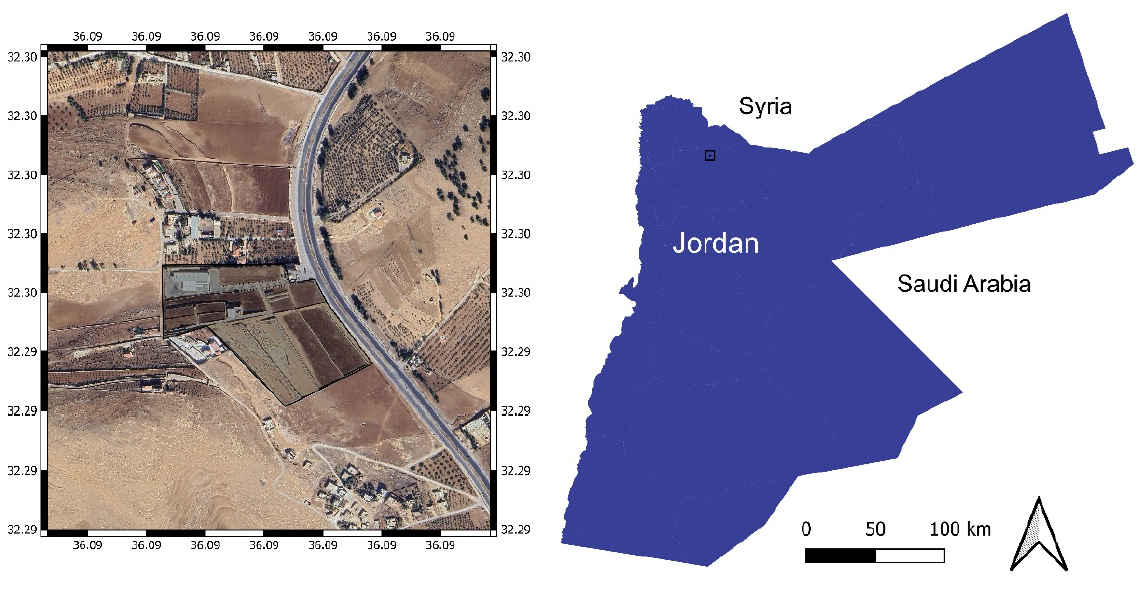
This study was conducted at an agricultural compound in the rural areas of Mafraq, Jordan (Fig. 1). At this site, 30 farm plots are commonly operational, these comprise greenhouses and open fields at non-fixed ratios. The arrangement of greenhouses and open fields changed every season based on the crops of choice for that season and based on the production schedule for the operators. Different types of crops are grown at the site, which vary by season, but are mainly comprised of vegetables. The region is characterized by a semi-arid Mediterranean climate pattern, with wet cold winters, warm summers, and most rainfall occurring between November and March. Meteorological records for the study site show that annual rainfall was around 215 mm, and average temperature was around 18.3oC. National soil maps show that the area is dominated by Regosols; however, the soil at the specific site for this study was reported as Calcisols. Water sources at the site included rainwater harvesting and purchased water from local suppliers (licensed groundwater reselling points).
Soil and irrigation assessment
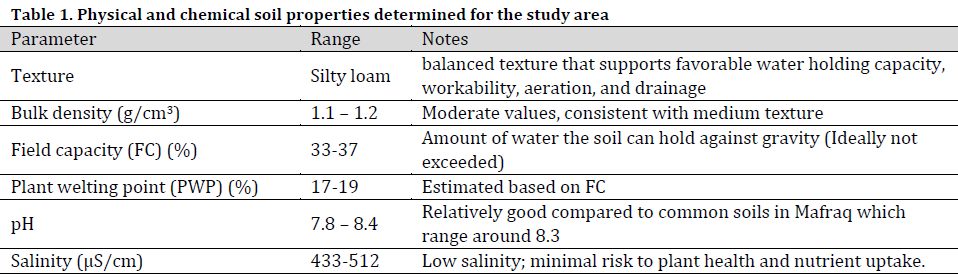
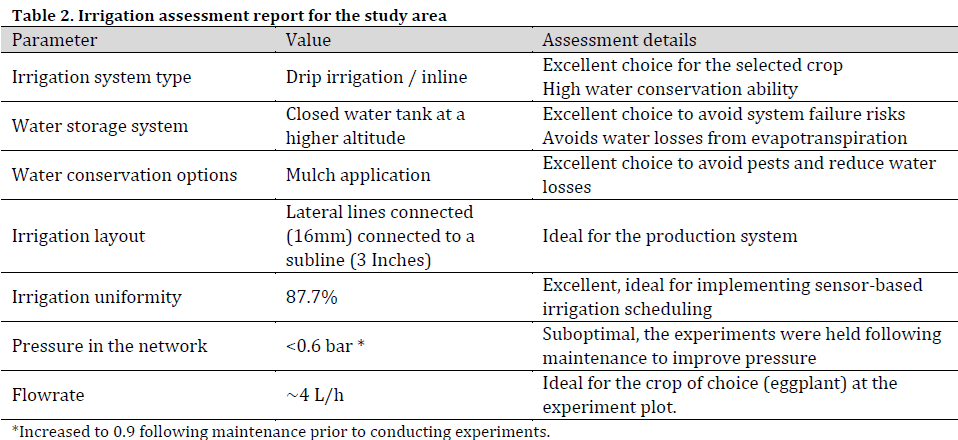
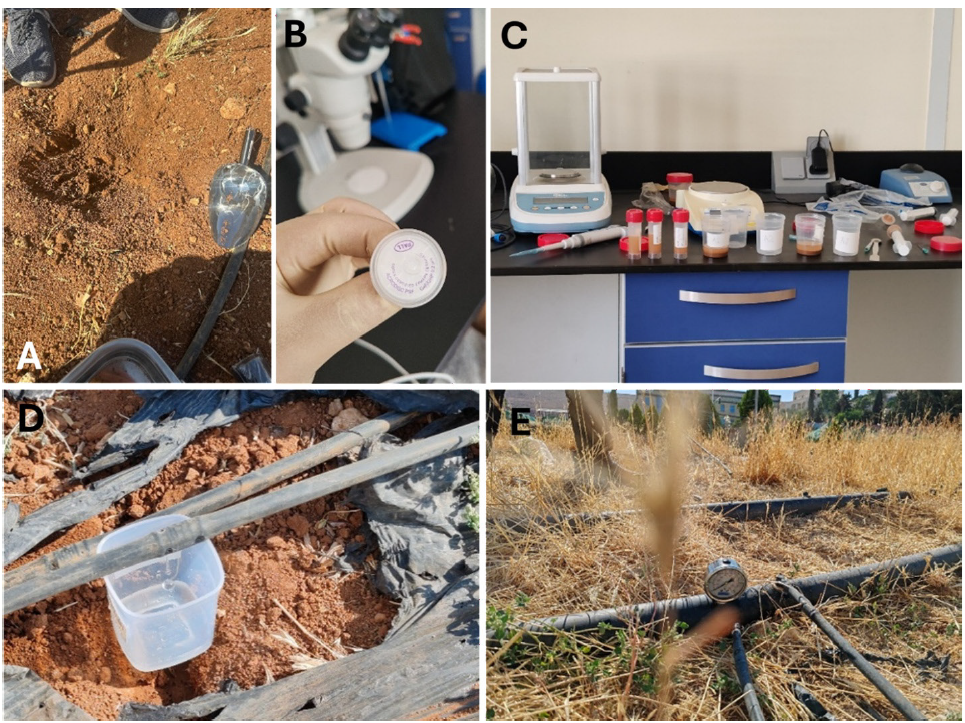
Data relevant to soil and irrigation assessments includes a wide range of physical and chemical properties such as water-holding capacity, fertility, salinity, and texture [24]. However, obtaining all these variables for a specific site can be costly, and are rarely readily available [25]. The current analysis included the minimal data needed to enable precise irrigation scheduling, zone-specific water application, and identifying any notable soil issues. For that purpose, soil samples were obtained from different points at the site. The samples were collected from the top layer (30cm) of the soil, which was a suitable depth to represent root growth conditions for vegetables. Air-dried soil samples were sieved using a 2 mm mesh and homogenized prior to analysis. Chemical properties were determined using a standardized soil-water extract method (Fig. 2). Field capacity (FC) was determined as the amount of water remaining in the soil after three days from saturation, while permanent wilting point was assumed to comprise 50% of FC for the purposes of this work. Soil analysis that was done in the lab included texture, bulk density, pH, and salinity. Irrigation water quality was done using samples from the emitters to account for any effects from the irrigation network, the samples were collected during the irrigation uniformity test. The results of the soil and irrigation system assessments are shown in Table 1 and Table 2, respectively.
Sensor assessment
Prior to selecting a sensor to conduct the irrigation experiments, several types were evaluated to determine the most suitable choice. Previous researchers have shown that different soils can have different sensor performances [26]. Thus, site-specific assessment is crucial in selecting a proper sensor.
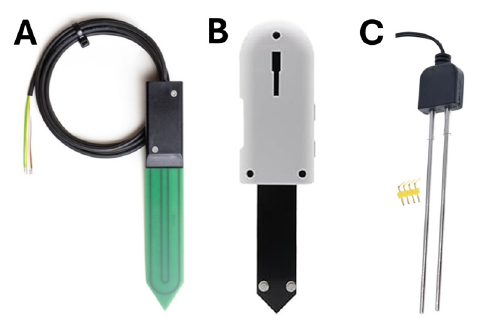
Overall, three types of sensors were evaluated: SMT100, T-Higrow, and TZT Module. Each model has a unique price range, measurement mechanism, and dimensions, but they are all widely available in the market. For each sensor type, 3 sensors were tested to confirm sensor-to-sensor variability. The SMT100 is a time domain transmission (TDT) sensor manufactured by Truebner GmbH in Germany (Fig. 3 A). The T-Higrow sensor is a capacitance-based soil moisture probe developed by LilyGo in China (Fig. 3 B), which integrates an ESP32 microcontroller, allowing for wireless data transmission and easy integration into IoT systems. The TZT soil moisture module (Fig. 3 C) is a resistivity-based sensor produced by TZT, a Chinese electronics supplier.
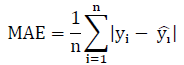
The sensors’ readings were assessed based on actual soil moisture in samples prepared in the lab. Three samples with 10%, 20%, and 30% soil moisture were prepared by adding controlled volumes of water to dried soil samples from the experimental site. For each assessment run, three sensors were used to examine repeatability and reproducibility across different moisture ranges. Evaluation criteria included measurement error, correlation, repeatability, and reproducibility. Measurement error was represented by mean absolute error (MAE), which expresses the average of the absolute differences between the sensor readings (yi) and actual soil moisture (ŷi) across the samples (n), is calculated based the following equation:
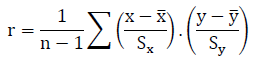
Correlation refers to the statistical relationship between the sensor’s readings (x) and the actual soil moisture content (y). Correlation was represented by Pearson’s correlation coefficient (r) based on the following equation:
Repeatability refers to a sensor’s ability to produce consistent measurements when the same procedure is repeated under identical conditions. High repeatability indicates more reliable readings in controlled environments, which is crucial for detecting small changes in soil moisture over time. Reproducibility, on the other hand, assesses how consistent the sensor’s measurements are when conditions vary (different operators, different instruments of the same model, or different locations), reflecting the sensor’s robustness and reliability across broader applications.
Water carbon assessment
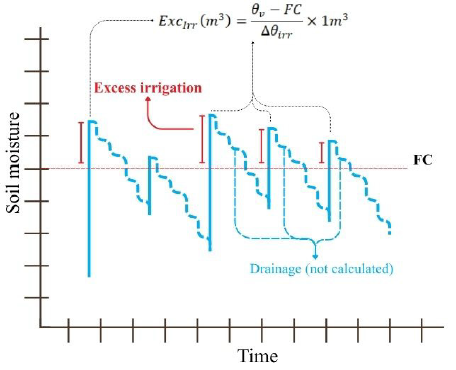
This assessment included a breakdown of all operations and relevant energy consumption related to irrigation. The entire process (from the water source to irrigation) was identified, and the energy and fuel use associated with all pathways was identified. The contribution of smart irrigation to water conservation was done using a data-driven approach. Smart irrigation would conserve water by avoiding the addition of excess water beyond field capacity (FC), after which water is not retained in the rootzone and not beneficially used by plants. Thus, soil moisture measurements were used to calculate the impact smart irrigation would have in conserving water. Excess irrigation (ExcIrr) from a single irrigation application, which would have been saved through smart irrigation, was estimated through the following equation:
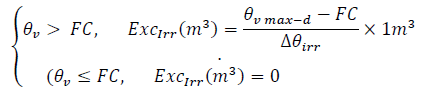
Where θv max-d is the maximum volumetric soil moisture recorded during a day in which irrigation was applied, and Δθirr is the amount of soil moisture increase from adding 1m3 of irrigation (Fig. 4). A preliminary controlled experiment showed that adding 1m3 of irrigation water to the experimental site increased θv sensor measurement by 12% (±1%). Accordingly, it was possible to link sensor measurements from irrigation monitoring experiments to the amount of excess water that was added. Four SMT100 sensors were then installed in the monitoring plot, one at each row. The experimental plot was under greenhouse conditions and normal irrigation management done at the site by the same team that normally manages it. This approach was used to determine the contribution of smart irrigation over existing management. This procedure of examining water added beyond FC would show the amount of water saved assuming an ideal smart irrigation application, since the water saved from smart irrigation could be low on the first tests after installation, but would be much higher after repeated tests, optimization, and integration into existing management.
To assess the contribution of water harvesting to water conservation and reducing the related fuel and energy use, the seasonal rainfall for the past 3 years was obtained for Mafarq. The seasonal rainfall was multiplied by the total surface area of the rooftop designated for rainwater harvesting (~1500m2), assumed to be 90%. These assumptions were based on feedback from the maintenance team to avoid overestimation. The water conservation from potential wastewater treatment was determined based on the amount of freshwater used for non-irrigation purposes. This was the fraction of water that can be retrieved as grey or black water, while irrigation was assumed to be non-retrievable due to lack of drainage or other recovery systems. Besides smart irrigation and non-conventional sources, the amount of water saved from using greenhouses was also considered to show how all these systems compare to a reduction in evaporation and reduced crop water needs. The amount of water saved from using greenhouses (Reduced evaporation) was determined based on existing records of irrigation consumption at greenhouses and open fields. The fuel consumption associated with transporting 1m3 of fresh water from local suppliers was calculated based on distance from the water source (D), fuel consumption per trip (Fueltrip), volume of water delivered per trip (Waterdel), and transportation efficiency (Efftrs) as follows:

Water-energy use (WEU) (kW.hr/m3) at the delivery site (selling point) was calculated using the hydraulic power formula based on the density of water (ρ), gravitational acceleration (g), total dynamic head (TDH), and pump efficiency (η):
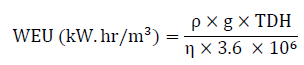
The local water supplier was estimated to have a pumping efficiency of 70% and a water depth of 400m, based on an assessment by local expert engineers and utilizing information such as pump model and date of most recent installation.
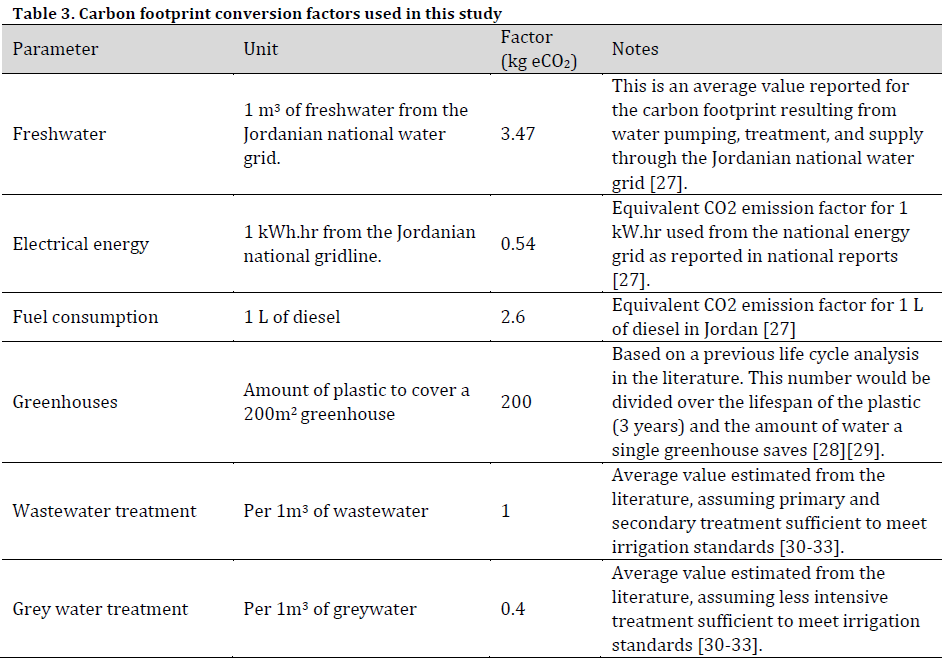
The carbon footprint as equivalent CO2 in kg (eCO2) for different components was calculated using national conversion factors for each water, energy, and fuel type and based on values reported in the literature (Table 3). Wastewater treatment, as a potential option, was assigned values reported from previous works due to lack of values reported for small-scale decentralized treatment systems in Jordan.
Results
Sensor selection results
Sensor assessment results considered accuracy, represented by correlation, and reliability, represented by repeatability and reproducibility (Table 4). Correlation for all sensors was excellent, showing that all sensors responded well to changing soil moisture levels.
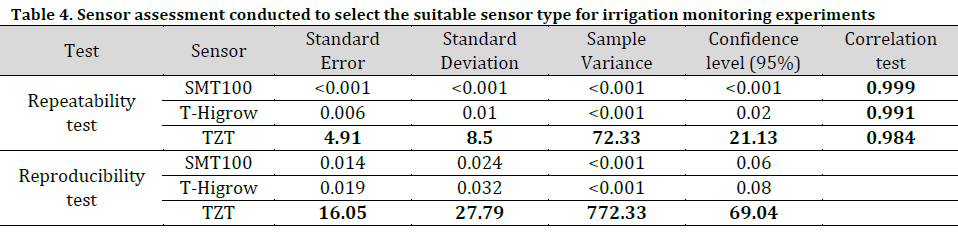
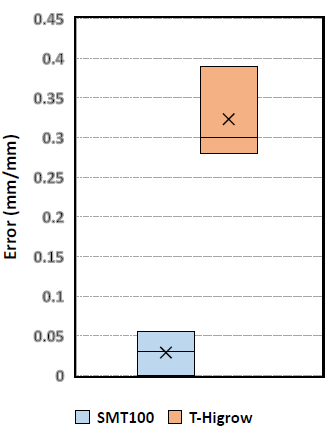
However, standard error, deviation and variance for the TZT sensor were substantially higher across both repeatability and reproducibility. This means that the same TZT sensor resulted in different measurements under the same conditions, and that different sensors of the same model also produced inconsistent readings. The high correlation shows that the readings of the TZT sensor increase with moisture level, but were not precise or reproducible. While the SMT100 and T-Higrow sensors showed acceptable performance across all previous indicators when the experiment was replicated using the same sensor or using different sensors. This was followed by an error assessment, i.e. sensor readings compared to lab-measured values (Fig. 5), which demonstrates the suitability of SMT100 calibration settings and its measurement principle (time domain transmission) over the T-Higrow capacitance principle. Based on these results, SMT100 was selected for further experiments on the contribution of smart irrigation for water conservation under the investigated conditions.
Smart irrigation prospect
The potential water savings from smart irrigation were determined through a data-driven approach based on sensor measurements of soil moisture. The readings were used to identify the excess moisture added to the soil through manually controlled irrigation (Fig. 4). Soil moisture level was considered in excess if it surpassed FC, which was identified based on previous soil analysis for the same site where the experiments were conducted.
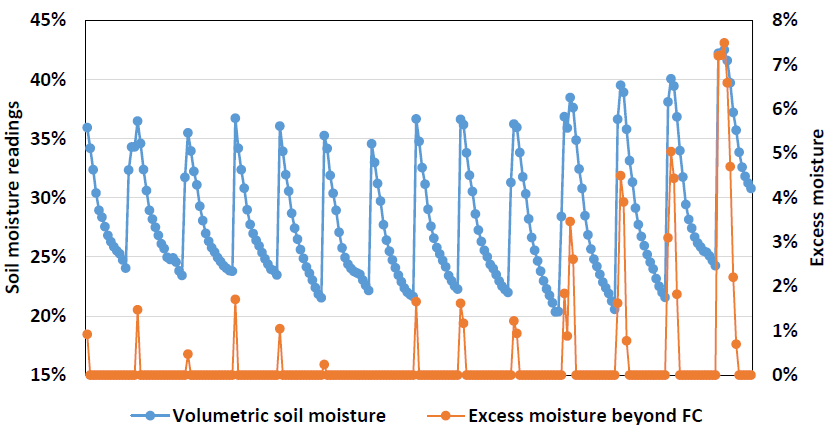
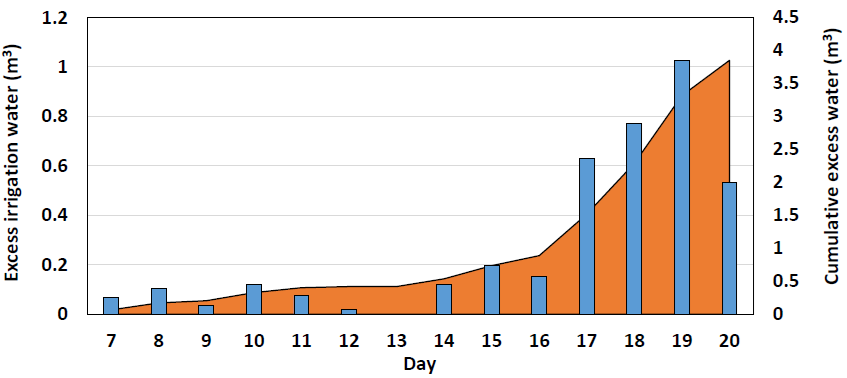
The results demonstrate that soil moisture was generally below FC, but never decreased to reach welting point (~18% on average) (Fig. 6). This meant that only a limited amount of water was lost to drainage, and crops would generally remain safe from water stress under the current management (Irrigation without sensor assistance). The time series overall indicate proper irrigation management, despite the absence of any feedback mechanisms for the irrigation managers, who did not have access to sensor readings. To estimate the volume of water that could potentially be saved through smart irrigation (defined as irrigation that avoids exceeding field capacity while also preventing the soil from reaching the wilting point) the time series were used to calculate the amount of water corresponding to soil moisture exceeding FC. Since the rootzone depth had not been previously determined, a straightforward physical calculation was not feasible. Instead, an experiment was conducted to determine the contribution of each cubic meter of irrigation water to increasing volumetric soil moisture (Fig. 7).
Analysis of the full time series demonstrated that a total of 5m3 could potentially be saved monthly within the experimental plot (100m2). This corresponds to 10-15m3/month for other plots, which range between 200 and 300m2.
Other water conservation approaches
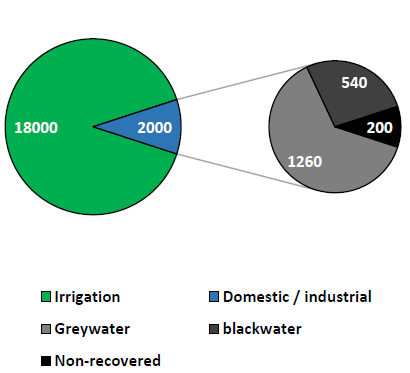
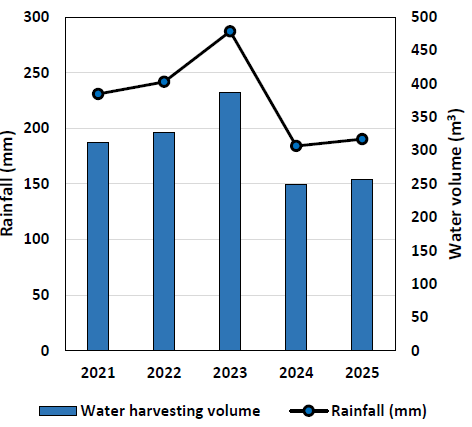
Total seasonal water usage was recorded to be 20,000m3, Irrigation usage was estimated to comprise 18,000m3 and the rest was allocated for other usage such as cleaning and hygiene maintenance. This provided the first potential pathway for water conservation, which was treated wastewater reuse (Fig. 8). Another possible supplementary water source is water harvesting. The storage tank designated for collecting rooftop rainfall is also used for storing water from other sources, and so, the amount was estimated using seasonal rainfall in the area (Fig. 9).
The utilization of greenhouses in the study area was not particularly intended for water conservation, but rather to achieve ideal temperatures for growth conditions, avoiding genetic contamination of the desired breeds, and minimizing biotic stress. The main utilization for greenhouses in the region is to avoid the risk of cold stress, due to minimum temperature dropping below 5oC at nighttime. However, greenhouses also affect water consumption by limiting evaporative factors, mainly solar radiation and wind speed, which increase evaporative demand in accordance with the Pennman-Monteith energy model. While a significant temperature increase is noticed inside greenhouses, this increase is somewhat buffered by scheduled ventilation around 12:00 pm to avoid heat stress.
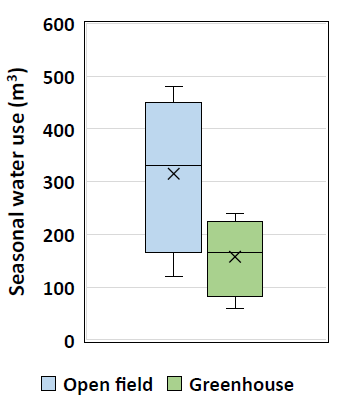
Irrigation water applications did not have a dynamic feedback mechanism to optimize water addition, i.e. there was no specific mechanism for the workers to identify crop water demand and apply water accordingly. Instead, the workers relied on experience, i.e. limiting or increasing water applied and monitoring the crops’ physiological responses. Thus, monitoring water consumption on greenhouses and open fields provides insights into the contribution of greenhouses to water conservation at the site (Fig. 10). Water consumption was different based on crop type, growing season, plot area, amongst other factors. The results indicate that agricultural production in greenhouses requires on average around 160m3, while open fields required around 315m3 on average. This indicates that greenhouses require almost half the water requirement on average, this would vary based on crop type, season, plotting area, and other factors. However, this observation is not necessarily a consistent water conservation approach, since greenhouse crops should be tested in open-field conditions at the site, and greenhouses are used based on designated experimental plans.
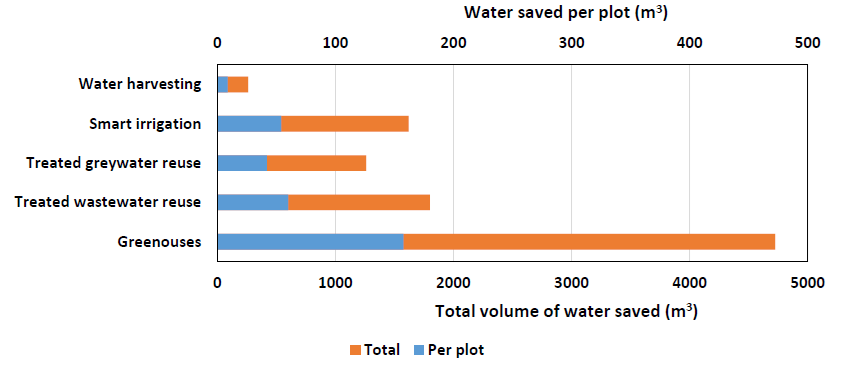
All the possible options can be compared when considering that 30 agricultural plots are usually active within the company perimeter. This means that the total water harvesting volume and total treated wastewater would be separated between these plots. Conversely, water savings from the greenhouses and smart irrigation (determined at plot level) would be multiplied by the number of plots for their common operational duration in the study site (6 months) (Fig. 11).
Carbon footprint
The carbon footprint associated with each cubic meter of water savings was determined based on the energy and fuel consumption corresponding to its use. While this is not holistic, it provides a general idea on the variations between different water conservation options. The carbon footprint of the water supply from the national grid (3.47 kg eCO2/m3) was considered as the benchmark.
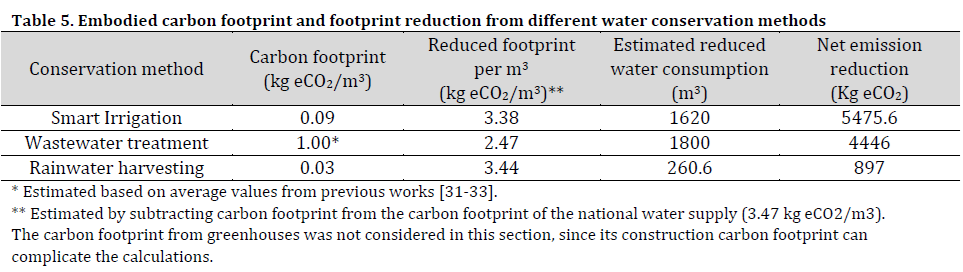
The carbon reduction from each water conservation method was estimated based on its ability to reduce water consumption and the embodied carbon footprint of conserved water (Table 5). Water harvesting resulted in moderate water savings but required transporting the water from the harvesting and storage site to the irrigation tank, which requires diesel-fueled delivery tank. Smart irrigation potentially allowed for reducing irrigation water consumption but was associated with using electricity-operated sensors, controllers, and pumps. Energy consumption from pumping was attributed to smart irrigation because the site did not normally use pumps to maintain pressure. The pressure was maintained in the network through the hydraulic head of the irrigation storage tank being higher than the cultivation plots. This hydraulic head is concentrated by a network of valves which deliver the water to one zone at a time by keeping only that one zone’s valve open, a process which is done manually based on a fixed schedule. However, with regards to smart irrigation, the process would be triggered and stopped based on sensor readings and so a dedicated pump would be needed for each zone. With regards to potential savings from wastewater treatment, it was based on the amount potentially generated on site, while carbon footprint was based on average values obtained from previous studies. The carbon footprint values for wastewater reuse have the highest uncertainty in this work, but the volumes were determined for the site, so they can be considered reliable for this work.
The results demonstrate that rainwater harvesting had the lowest contribution to reducing the carbon footprint, while smart irrigation had the largest potential impact on carbon footprint reduction (Table 5). Despite rainwater harvesting having the lowest embodied carbon footprint, its contribution to carbon reduction was small due to its low water savings potential on the site. Wastewater reuse had a larger water savings potential; however, its high embodied carbon footprint resulted in smaller net reduction compared to smart irrigation option.
Discussion
Limited works have explored the water-carbon tradeoffs between different water conservation approaches. This work compared smart irrigation to two non-conventional water options, rainwater harvesting and wastewater treatment and reuse, at a commercial agricultural compound in Northern Jordan. The study utilized soil moisture sensor measurements and water use and management information to derive reliable estimates. The carbon footprint of each water conservation method was driven mainly by pumping energy, not by treatment chemistry or materials. Wastewater treatment and reuse was assigned the highest footprint (1.00 kg eCO2/m3), largely due to energy-intensive aeration during treatment; conventional activated sludge processes require far more energy than anaerobic alternatives, which operate at 0.01–0.05 kWh/m3 [34]. Smart irrigation’s footprint (0.09 kg eCO2/m3) was calculated from powering sensors, controllers, and pumps. Rainwater harvesting had the lowest footprint (0.03 kg eCO2/m3), derived mainly from transportation, since collection relied mostly on gravity rather than pressurized pumping. This matches previous findings that pumping operations can produce around 6.5 times higher CO2-equivalent emissions than mains water delivery, and that pumping accounts for roughly 70% of the net life-cycle impact of rainwater harvesting systems where a pump is used [35]. Recycling water through non-pumped rainwater harvesting has been shown to cut global warming impact by 19–51% relative to full life-cycle emissions [35], consistent with the low footprint observed here.
Smart irrigation, on the other hand, showed potential savings of 5m3 of water per month per 100m2.Over the site’s 6-month operational season, this corresponds to roughly 30m3 per 100m2 per season. This demonstrates how savings per plot can be modest, but it accumulated substantially once extended across a full farm or estate. It is important to note that these numbers are site-specific and only reflect the water management conditions at the site. However, some aspects would likely be reflected in other similar sites, such as how smart irrigation gave the largest net reduction in carbon footprint, even though its per-m3 footprint was not the lowest. This agrees with a previous study on solar-powered smart irrigation, which reported a 28.1% reduction in combined water and energy consumption compared to conventional irrigation, along with a drop in carbon footprint from 0.252 to 0.181 kg CO2/m2/year [36]. This suggests that water savings, not the footprint of the technology itself, mainly drives the climate benefit. Rainwater harvesting’s small contribution to overall carbon reduction reflects the same pattern: even where a commercial rainwater harvesting system was shown to outperform municipal water supply in nearly every environmental impact category, its advantage depended on the system’s energy intensity staying below a specific threshold (an energy saving of at least 0.86 kWh/m3 relative to the municipal baseline) [37]. This highlights how sensitive its benefit is to water volumes and system design rather than to the technology’s inherent footprint. Wastewater reuse had greater water-saving potential than rainwater harvesting, but its higher footprint reduced its net benefit. This is similar to previous reports showing that demand-side water conservation could improve wastewater treatment plant eco-efficiency by up to 189%, reducing GHG emissions by 1.67 million tons CO2-equivalent nationally compared to relying on treatment-technology improvements alone [38].
Several uncertainties should be noted regarding the findings presented in this work. The wastewater reuse footprint was based on published average values rather than site measurements, making it the largest source of uncertainty; treatment energy use varies with technology, influent load, and electricity mix, ranging from as little as 0.01 kWh/m3 for anaerobic systems to substantially more for conventional aerobic treatment [34]. Recent advancements have also shown that treatment process can be optimized to produce minimal environmental impact through circular applications [39]. Smart irrigation water savings were based on sensor estimates, which may not capture seasonal or crop-specific variation. Additionally, performance and calibration functions will vary according to soil type and sensor module [40], highlighting the importance of site/plant type calibration in each case. Rainwater harvesting estimates depended on assumptions about catchment area, rainfall, and transport emissions, which are also site-specific. The national grid baseline factor also reflects Jordan’s current electricity mix, which will shift as renewable energy use grows. Greenhouses were left out of this comparison because their main role is agronomic, not water conservation; allocating their embodied footprint to water savings alone would not reflect their overall function on site.
Conclusions
There is a lack of field-based studies that compare smart irrigation with other non-conventional water conservation options under the same farming conditions and within a shared water–carbon framework. This study assessed the possible contribution of smart irrigation to sustainable water conservation compared to other options within a commercial agricultural compound in Northern Jordan. The results indicate that smart irrigation can improve irrigation efficiency even where water management is already reasonably maintained. In the present case, soil moisture slightly exceeded FC several times during the monitoring period. However, converting these losses into water volumes throughout the season and across all growing plots resulted in significant potential water savings. This point is important because it shows that, in well-managed semi-arid systems, the benefit of smart irrigation may lie less in dramatic savings at the plot level and more in the steady reduction of small, repeated losses. While the volume saved within a single plot was modest, the cumulative effect became far more meaningful when considered across the larger number of operational plots within the agricultural compound. From a managemental perspective, this observation gives smart irrigation practical significance as a tool for improving overall efficiency at farm scale rather than only as a plot-scale intervention. Wastewater reuse and rainwater harvesting showed contrasting profiles. Wastewater reuse showed greater water-saving potential, estimated by the fraction of water consumption not directed towards irrigation. However, it also carried a potentially high embodied carbon footprint. Rainwater harvesting had the opposite profile: the lowest footprint, but the smallest saving potential, given the site’s arid environment. This demonstrated how water demand management can offer a substantially higher reward compared to technology integration and non-conventional water sources. Together, these results show that the most carbon-effective conservation option is context-dependent. It is shaped as much by pumping energy and system design as by the technology category itself. For farm managers and policymakers in Mafraq, and in similar semi-arid parts of Jordan and the wider region, this has a practical implication. Conservation strategies should be selected based on local energy demand and realistic water-saving potential. They should not be chosen based on assumed environmental performance alone. Smart irrigation offers a particularly accessible entry point in this regard. It required minimal infrastructure investment compared to options like wastewater treatment. Despite this lower investment, it still demonstrated a significant potential carbon footprint reduction in this study.
Conflict of interest statement
The authors declared no conflict of interest.
Funding statement
The authors declared that no funding was received in relation to this manuscript.
Data availability statement
The authors stated that experimental data used in this study will be made available upon reasonable request from the corresponding author.
References
- Rezaei EE, Webber H, Asseng S, Boote K, Durand JL, Ewert F, Martre P, MacCarthy DS. Climate change impacts on crop yields. Nat. Rev. Earth Environ. 2023;4(12):831-46. DOI
- Rosa L, Chiarelli DD, Sangiorgio M, Beltran-Peña AA, Rulli MC, D’Odorico P, Fung I. Potential for sustainable irrigation expansion in a 3 °C warmer climate. Proc. Natl. Acad. Sci. 2020;117(47):29526-34. DOI
- Al-Hazmi HE, Mohammadi A, Hejna A, Majtacz J, Esmaeili A, Habibzadeh S, Saeb MR, Badawi M, Lima EC, Mąkinia J. Wastewater reuse in agriculture: Prospects and challenges. Environ. Res. 2023;236:116711. DOI
- Zegait R, Kouadri S, Chelgham M, Vucinic L, Ajia F, Sieni E, Al-Kilani MR. AI-based prediction of total dissolved solids in reverse osmosis desalination for arid regions. Desalin. Water Treat. 2025;323:101411. DOI
- Al-Bakri J, Al-Kilani MR. Drought Risk Management in the MENA Region: The Role of Earth Observations and Open-Source Tools. In: NATO Science for Peace and Security Series C: Environmental Security. Springer Nature Switzerland. 2025. DOI
- Al-Omoush RA, Al-Bakri JT, Abdelal Q, Al-Kilani MR, Hamdan I, Aljarrah A. Developing a Remote Sensing-Based Approach for Agriculture Water Accounting in the Amman–Zarqa Basin. Water. 2025;17(14):2106. DOI
- Abdelal Q, Al-Kilani Mr, Al-Bakri J, Keblouti M, Sakna A. Reduced Frequency of Soil Moisture Measurements for Cost-effective Irrigation Management in Arid Regions. J. Agrometeorol. 2026;28(1):99-102. DOI
- Vallejo-Gómez D, Osorio M, Hincapié CA. Smart Irrigation Systems in Agriculture: A Systematic Review. Agronomy. 2023;13(2):342. DOI
- Bwambale E, Abagale FK, Anornu GK. Smart irrigation monitoring and control strategies for improving water use efficiency in precision agriculture: A review. Agric. Water Manag. 2022;260:107324. DOI
- Kim Y, Evans R, Iversen W. Remote Sensing and Control of an Irrigation System Using a Distributed Wireless Sensor Network. IEEE Trans. Instrum. Meas. 2008;57(7):1379-87. DOI
- Adeyemi O, Grove I, Peets S, Domun Y, Norton T. Dynamic Neural Network Modelling of Soil Moisture Content for Predictive Irrigation Scheduling. Sensors. 2018;18(10):3408. DOI
- Kumar KA, Chaitanya K, Neelima TL, Madhukar B. Advances in Smart Irrigation Technologies for Enhancing Water Use Efficiency and Crop Productivity under Changing Climate Conditions. Agriculture Reviews 2024;3(1):01-5. DOI
- Hamdouni A. Artificial Intelligence-Driven Integrated Water Management and Agricultural Sustainability: Evidence from Saudi Arabia. Resources. 2026;15(3):38. DOI
- Martelli A, Rapinesi D, Verdi L, Donati IIM, Dalla Marta A, Altobelli F. Smart irrigation for management of processing tomato: a machine learning approach. Irrig. Sci. 2024;43(6):1407-24. DOI
- Huang Z, Wang Y, Hui C, Xiao C. An Intelligent Water-Saving Irrigation System Based on Multi-Sensor Fusion and Visual Servoing Control. In: 2025 12th International Forum on Electrical Engineering and Automation (IFEEA). IEEE. 2025:1023-7. DOI
- Touil S, Richa A, Fizir M, Argente García JE, Skarmeta Gómez AF. A review on smart irrigation management strategies and their effect on water savings and crop yield. Irrig. Drain. 2022;71(5):1396-416. DOI
- Christou A, Beretsou VG, Iakovides IC, Karaolia P, Michael C, Benmarhnia T, Chefetz B, Donner E, Gawlik BM, Lee Y. Sustainable wastewater reuse for agriculture. Nat. Rev. Earth Environ. 2024;5(7):504-21. DOI
- Frimpong F, Asante MD, Peprah CO, Amankwaa-Yeboah P, Danquah EO, Ribeiro PF, Aidoo AK, Agyeman K, Asante MOO, Keteku A. Water-smart farming: review of strategies, technologies, and practices for sustainable agricultural water management in a changing climate in West Africa. Front. Sustain. Food Syst. 2023;7:1110179. DOI
- Danboos A, Sharil S, Mohamad Hamzah F, Yafouz A, Huang YF, Ahmed AN, Ebraheem AA, Sherif M, El-Shafie A. Water budget-salt balance model for calculating net water saving considering different non-conventional water resources in agricultural process. Heliyon. 2023;9(4):e15274. DOI
- Kalboussi N, Biard Y, Pradeleix L, Rapaport A, Sinfort C, Ait-mouheb N. Life cycle assessment as decision support tool for water reuse in agriculture irrigation. Sci. Total Environ. 2022;836:155486. DOI
- Raimondi A, Quinn R, Abhijith GR, Becciu G, Ostfeld A. Rainwater Harvesting and Treatment: State of the Art and Perspectives. Water. 2023;15(8):1518. DOI
- Efthimiou N, Giotis T, Ragkos A. Applications for Non-Conventional Water Resources in the Mediterranean Basin: A Literature Review. Sustainability. 2025;17(11):4964. DOI
- He X, Li Z, Xing C, Li Y, Liu M, Gao X, Ding Y, Lu L, Liu C, Li C. Carbon footprint of a conventional wastewater treatment plant: An analysis of water-energy nexus from life cycle perspective for emission reduction. J. Clean. Prod. 2023;429:139562. DOI
- Al-Khreisat A, Al-Bakri J, Atiyat M, Al-Kilani MR, Farhan I, Zucca C, Khudairat W. Soil Analytical Capabilities for Sustainable Land Management Across National Soil Services in the Mediterranean. Sustainability. 2025;17(18):8228. DOI
- Al-Bakri JT, Atiyat M, Al-Kilani MR, Al-Khreisat A, Farhan I, Zucca C. Towards harmonized soil intelligence: insights from a multi-country survey of mediterranean soil information systems. Euro-Mediterr. J. Environ. Integr. 2026;11(2):97. DOI
- Abdelal Q, Al-Kilani MR, Al-Shishani G. Impact of Soil Particle Size on Soil Moisture Measurements through Dielectric and Electrical Resistance Properties. Eurasian Soil Sci. 2025;58(3):32. DOI
- Ministry of Environment. Updated submission of Jordan’s 1st nationally determined contribution (NDC). Hashemite Kingdom of Jordan. UNFCCC. 2021.
- Wyngaard SR, Kissinger M. Tomatoes from the desert: Environmental footprints and sustainability potential in a changing world. Front. Sustain. Food Syst. 2022;6:994920. DOI
- CIDB MC. Construction industry development board Malaysia. Kuala Lumpur. 2007.
- Gupta R, Lee S, Lui J, Sloan WT, You S. Carbon footprint assessment of water and wastewater treatment works in Scottish islands. J. Clean. Prod. 2024;450:141650. DOI
- Gallagher J, Gill LW. The Life Cycle Environmental Performance of On-Site or Decentralised Wastewater Treatment Systems for Domestic Homes. Water. 2021;13(18):2542. DOI
- Masmoudi Jabri K, Nolde E, Ciroth A, Bousselmi L. Life cycle assessment of a decentralized greywater treatment alternative for non-potable reuse application. Int. J. Environ. Sci. Technol. 2019;17(1):433-44. DOI
- Rodríguez C, Sánchez R, Rebolledo N, Schneider N, Serrano J, Leiva E. Life cycle assessment of greywater treatment systems for water-reuse management in rural areas. Sci. Total Environ. 2021;795:148687. DOI
- Jayabal R, Sivanraju R. Wastewater Treatment for Energy Conservation and Zero Carbon Footprint: A Review. Energy Sci. Eng. 2025;13(7):3806-20. DOI
- Rashid ARM, Bhuiyan MA, Pramanik B, Jayasuriya N. Life cycle assessment of rainwater harvesting system components – To determine environmentally sustainable design. J. Clean. Prod. 2021;326:129286. DOI
- Abdelhamid MA, Abdelkader TK, Sayed HAA, Zhang Z, Zhao X, Atia MF. Design and evaluation of a solar powered smart irrigation system for sustainable urban agriculture. Sci. Rep. 2025;15(1):11761. DOI
- Ghimire SR, Johnston JM, Ingwersen WW, Sojka S. Life cycle assessment of a commercial rainwater harvesting system compared with a municipal water supply system. J. Clean. Prod. 2017;151:74-86. DOI
- He Z, Wang R, Wang J, Chen H, Zhang S, Wang K, Lai J, Ren N, Ho S. Water conservation strategies reduce greenhouse gas emission from wastewater treatment plants: A domino effect. Environ. Sci. Ecotechnol. 2025;26:100574. DOI
- Al‐Kilani MR, Abdelal Q, Bani‐Melhem K. Exploring the Circular Reuse Potential of Wastewater and Scrap Metal in Crop Irrigation at Urban–Rural Intersections Through Electrocoagulation. Water Environ. Res. 2026;98(4):e70364. DOI
- Al‐Kilani MR, Abdelal Q, Al‐Shishani G. Are conductivity sensors useless for irrigators? Exploring measurement consistency around soil moisture thresholds relevant to different applications. Irrig. Drain. 2024;74(3):1018-30. DOI
Cite this article:
Al-Kilani MR, Okour MA, Abdelal Q, Bani-Melhem K, Abu-Mousa R, Egbebiyi TS. Assessing water-carbon tradeoffs of smart irrigation and non-conventional water sources using sensor measurements and water use information. DYSONA-Applied Science. 2027;8(1):1-16. doi: 10.30493/das.2026.010308