
Gohar Murad Khan 1; Javed Nawab 2*; Hasnain Abbas 3; Muhammad Ayaz 2,4; Abdur Rahman 5; Hafiz Ullah 1; Shabir Ahmad 6; Amjad Ali 1
1, State Key Laboratory of Geomicrobiology and Environmental Changes, School of Environmental Studies, China University of Geosciences, Wuhan 430074, China
2, Department of Environmental and Conservation Sciences, University of Swat, Mingora, Swat, 19120, Khyber Pakhtunkhwa, Pakistan
3, UrbanComp Lab, School of Geography and Information Engineering, China University of Geosciences, China University of Geosciences, Wuhan 430074, China
4, State Key Laboratory of Lake and Watershed Science for Water Security, Institute of Hydrobiology, Chinese Academy of Sciences, Wuhan, 430072, China
5, Key Laboratory of Algal Biology, Institute of Hydrobiology, Chinese Academy of Sciences, Wuhan, 430072, China
6, Institute of Environmental and Occupational Health Sciences, School of Medicine. National Yang Ming Chiao Tung University, Taipei, Taiwan
E-mail:
javednawab11@yahoo.com
Received: 07/02/2026
Acceptance: 25/04/2026
Available Online: 26/04/2026
Published: 01/07/2026

Manuscript link
http://dx.doi.org/10.30493/DAS.2026.012604
Abstract
Significant public health issues are posed by the presence of potentially toxic elements (PTEs) within the groundwater of rapidly growing urban areas. A detailed geochemical assessment of PTE distribution and sources across four major urban centers in Pakistan is presented in this research. The selected locations (Faisalabad, Lahore, Swat, and Batkhela) reflect a range of human-induced pressures. Inductively coupled plasma mass spectrometry (ICP-MS) was utilized to examine sixty groundwater samples for major ions and PTEs. Integration of multivariate statistics, geochemical modeling, and USEPA-based health risk assessments allowed for a thorough interpretation of the data. WHO guidelines of 3 µg/L for Cadmium (Cd) were surpassed in Faisalabad, Swat, and Batkhela. In contrast, Lead (Pb) levels stayed within the WHO limit of 10 µg/L in all cities. While water samples from Faisalabad were mostly classified within Ca-Cl type, Ca-HCO₃ type water characterized Swat and Batkhela. Finally, three primary contamination sources were pinpointed by principal component analysis. These included industrial salinization, agricultural impacts, and the movement of metals bound to particles. Possible health threats in three of the four urban centers were signaled by the health risk assessment. The USEPA safety threshold of 1 was exceeded by non-carcinogenic hazard indices (HI), which peaked at 2.56 for children in Swat. Standard USEPA limits were also surpassed by carcinogenic risk estimates. These values exceeded the acceptable threshold by roughly 4 to 34 times. Evidence that modern industrial and farming activities degrade groundwater quality in Pakistan is provided by this research. The necessity for specific interventions is highlighted by these results. Suggested measures include stricter control of industrial waste, sustainable farming methods, and expanded investment in water treatment systems.
Keywords: Potentially toxic elements, Groundwater, Health risk assessment, Source apportionment
Introduction
Groundwater is an essential component of the global hydrological cycle. It serves as a primary source of freshwater for society [1-3]. The stability of drinking water systems, agricultural productivity, and industrial continuity are sustained by this resource. This function is particularly vital in regions contending with surface water scarcity [4]. Socioeconomic development and survival are determined by this dependency in arid and semi-arid zones like Pakistan, where such reliance is not a discretionary choice [5]. Escalating urban populations, extensive irrigation networks, and an expanding industrial base are supported by groundwater abstraction. National security and public health are therefore linked to its sustainability and quality [6]. This reliance has been deepened by the intensification of climate variability. Frequent droughts and unreliable rainfall characterize this trend, placing immense and often unsustainable pressure on subsurface aquifers [7]. Such pressure is not limited to volume alone. A parallel and subtle but harmful crisis is presented by the qualitative degradation of the resource. Complex contaminants have been introduced into the hydrogeological environment by the rapid and often unplanned expansion of industrial and urban landscapes. Potentially Toxic Elements (PTEs) have emerged as a paramount concern within this context [8][9]. These inorganic contaminants are produced by a variety of anthropogenic sources. They pose a persistent threat due to their bio-accumulative potential and non-biodegradable nature, establishing direct pathways to human exposure through drinking water [10]. Consequently, reliable natural reservoirs are becoming a focal point of environmental risk. This transition transforms a vital resource into a potential vehicle for long-term ecological harm and chronic disease.
The degradation of groundwater quality is characterized by a complex interaction between accelerating anthropogenic drivers and the natural geogenic background. Innate hydro-chemical signatures of groundwater systems are established through rock-water interactions, redox-driven elemental mobilization, and the dissolution of aquifer matrix minerals over geological timescales [11][12]. Elevated concentrations of specific elements are naturally produced by these processes, including fluoride in granitic terrains or arsenic in alluvial aquifers, depending on local hydrogeochemical conditions and lithology. Nevertheless, anthropogenic signatures increasingly dominate the contemporary chemical state of groundwater, particularly within peri-urban and urban environments [13][14].
Modern human activities give rise to pervasive and multifaceted fluxes of Potentially Toxic Elements (PTEs). Industrial point-source pollution originates from chemical manufacturing, tanning, and metallurgical units. Diffuse contamination is introduced by agricultural practices, including metal-based pesticides and phosphate fertilizers, which serve as a source of cadmium. Furthermore, atmospheric deposition from industrial smokestacks and vehicular exhaust, alongside uncontrolled seepage from unlined wastewater channels and landfills carrying urban effluents, contributes to this burden [15][16]. This anthropogenic overlay interacts with the geogenic baseline by altering redox and pH conditions. Such shifts often remobilize previously stable elements sequestered in sediments [17].
Critical concern is directed toward elements such as nickel (Ni), chromium (Cr), cadmium (Cd), and lead (Pb) in this context [18]. These priority contaminants are defined by their well-documented toxicology, including carcinogenic, nephrotoxic, and neurotoxic effects, as well as their capacity for bioaccumulation through the trophic chain and environmental persistence [19]. Primary exposure for millions occurs through the ingestion of contaminated groundwater. Chronic low-dose exposure leads to severe public health burdens that frequently remain clinically silent until irreversible damage is sustained [20]. Consequently, understanding groundwater chemistry has evolved beyond a strictly hydrogeological pursuit; such knowledge is now a prerequisite for preventive health policy and epidemiological insight.
A documented and severe public health emergency is manifested by the theoretical risks associated with PTE contamination within the national context of Pakistan [17]. Groundwater resources beneath industrial corridors and densely populated urban centers are increasingly threatened by unchecked pollution [21]. A consistent narrative emerges from a growing body of literature regarding regions such as Khyber Pakhtunkhwa and Punjab. Concentrations of PTEs in these areas routinely exceed the national standards and safe drinking water guidelines established by the World Health Organization (WHO) [22]. Reports from industrial districts in Punjab, including those surrounding Faisalabad and Lahore, indicate lead and cadmium concentrations several orders of magnitude above permissible limits. These findings correlate directly with inadequate waste treatment infrastructure and high industrial density [23][24]. Complex contamination patterns are similarly revealed by research in the geologically rich Swat Valley. Natural mineralization of heavy metals in this region is exacerbated by anthropogenic activities such as the use of contaminated irrigation water, deforestation, and mining [25].
Although localized studies offer crucial insights into contamination hotspots, a significant research gap remains. The literature lacks a synthesized, comparative framework for the systematic evaluation of PTE contamination across a gradient of urban typologies [26]. Disparate methodologies and a focus on specific elements or single cities characterize most existing research, which hinders comparative risk analysis. An integrated assessment utilizing advanced statistical approaches and consistent hydro-chemical methods is required to differentiate pollution sources. Such a framework would allow for the uniform quantification of health risks and the mapping of spatial distribution patterns across diverse urban ecosystems, ranging from rapidly urbanizing towns to mega-cities [27]. Proactive and regionally coordinated groundwater management is currently limited by this research gap. Policymakers are often restricted to reactive and localized interventions rather than comprehensive public health protection strategies.
In this study, a comprehensive and comparative geochemical appraisal of Potentially Toxic Elements (PTEs) in the groundwater of four strategically selected urban centers in Pakistan is presented to bridge the aforementioned knowledge gap. Batkhela, Swat, Faisalabad, and Lahore were chosen to represent a spectrum of hydrogeological settings and anthropogenic pressure. Lahore epitomizes a historic megacity subject to intense vehicular and industrial pollution. A major industrial and textile hub with significant agro-industrial influence is represented by Faisalabad. Swat illustrates an urbanizing area with agricultural and tourism pressures set within complex geological terrain, while Batkhela serves as a growing district headquarters with mixed influences [28].
An integrated hydro-chemical methodology is employed, synergizing field sampling, advanced instrumental analysis, and multivariate statistics, including Cluster Analysis and Principal Component Analysis. Geochemical modeling of saturation indices, spatial interpolation techniques, and standardized health risk assessment models are also incorporated. The investigation is guided by four specific objectives. First, prevailing hydro-chemical facies are characterized, and dominant natural processes, such as silicate weathering and evaporation, are identified. Second, concentration levels are determined and spatial distribution maps are created for key PTEs to highlight safe zones and contamination plumes. Third, statistical source apportionment techniques are utilized to apportion potential geogenic, industrial, agricultural, or municipal sources. Fourth, non-carcinogenic and carcinogenic health risks to adults and children are quantitatively evaluated based on long-term groundwater ingestion. A diagnostic, evidence-based framework is provided through this holistic approach, moving beyond mere contamination reporting. Actionable scientific intelligence is generated to inform tiered monitoring programs, guide targeted remediation efforts, and support the development of rational water-safety policies. Such efforts contribute to the sustainable management of groundwater and the protection of vulnerable populations in Pakistan and comparable hydrogeological settings worldwide.
Materials and Methods
Study area description
The investigation was conducted across four strategically selected urban centers in Pakistan. These sites encompass diverse anthropogenic, climatic, and hydrogeological regimes to ensure a representative analysis of groundwater contamination dynamics [23]. Faisalabad and Lahore in the Punjab Province, alongside Batkhela and Swat in the Khyber Pakhtunkhwa (KP) Province, are designated as the primary study locations (Fig. 1). A strategic gradient is established by these sites, which extend from hyper-urbanized industrial centers to rapidly urbanizing regions influenced by significant agricultural and geo-natural factors [29]. This selection was specifically structured to enable a comparative evaluation of the mechanisms through which varying land-use intensities and geological frameworks modulate the transport, sources, and fate of Potentially Toxic Elements (PTEs) within groundwater systems [30].
The two study areas in Punjab are situated within the vast expanse of the Indus Plain. This region is underlain by a highly productive and extensive Quaternary alluvial aquifer system, which is categorized among the most significant globally. These aquifers are composed of silts, gravels, and unconsolidated sands deposited by the Indus River and its tributaries. High transmissivity and porosity characterize these formations, through which substantial groundwater extraction is facilitated. However, these hydrogeological properties also render the aquifers vulnerable to the large-scale migration of contaminant plumes [31].
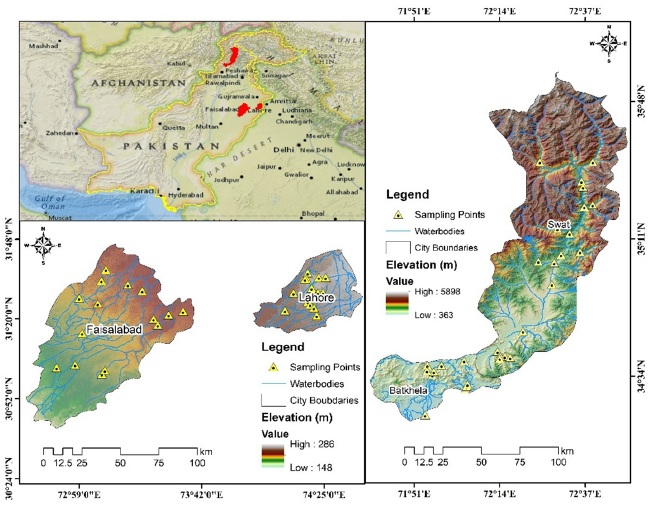
Lahore (31.5204° N, 74.3587° E) is a historic megacity with a population exceeding 13 million and represents a pinnacle of anthropogenic pressure. Multifaceted threats to groundwater are posed by intensive vehicular emissions and a dense network of mixed industrial units, including chemical plants, tanneries, and metalworks. Additionally, substantial subsurface infiltration of untreated municipal wastewater is driven by a strained sanitation infrastructure. Faisalabad (31.4504° N, 73.1350° E), frequently designated as the Manchester of Pakistan, serves as the primary industrial and textile hub of the nation. Groundwater chemistry in this region is governed by a complex interplay of point-source industrial discharges and non-point source agrochemical leaching. These discharges are primarily sourced from bleaching, dyeing, and finishing units, while the surrounding intensively cultivated croplands contribute to agrochemical leaching. A distinct contamination signature is created by these combined factors [32][33].
In stark contrast, the study areas in Khyber Pakhtunkhwa are characterized by a dynamic tectonic and topographic landscape. Groundwater resides primarily in fractured and weathered bedrock aquifers within metamorphic and sedimentary formations, overlain by heterogeneous colluvial and alluvial deposits in the valleys [34][35]. These aquifers typically have lower well yields and more variable, structurally controlled flow paths compared to the porous aquifers of Punjab.
Swat (34.8333° N, 72.4333° E) is undergoing a rapid transformation driven by agricultural expansion and tourism. Groundwater quality in this region is subjected to stresses from untreated domestic sewage originating from expanding settlements and hotels. Furthermore, agricultural runoff within fertile valleys and the potential geogenic release of metals from mineralized bedrock influence the subsurface system [36][37]. Batkhela (34.6167° N, 71.9667° E) serves as a developing district headquarters and functions as a transitional urban center. In this locality, increasing municipal waste, agricultural practices, and small-scale commercial activities have begun to alter a historically natural hydro-chemical system [38].
Recharge mechanisms and hydro-chemical evolution are governed by climate, which serves as a critical differentiating factor across these sites. A semi-arid climate is experienced by the Punjab locations, where mean annual precipitation totals approximately 600 mm. The intense monsoon season, occurring from July to September, accounts for over 70% of this volume. This concentration results in episodic recharge events of high intensity. Conversely, the northern sites in KP are characterized by higher annual precipitation, reaching up to 1000 mm, along with significant contributions from seasonal snowmelt in the surrounding high mountains. These factors lead to more sustained recharge periods and influence both solute transport and dilution capacities [39]. These distinct climatic and hydrogeological backdrops provide a robust natural laboratory for examining the behavior of PTEs under contrasting anthropogenic forcing and environmental controls.
Groundwater sampling and analytical procedures
Sampling strategy and collection
The post-monsoon dry season served as the timeframe for a systematic groundwater sampling campaign. This specific period captured conditions of minimal dilution and peak contaminant concentration. A total of 60 water samples were collected from the four cities of Lahore, Faisalabad, Swat, and Batkhela, with each city contributing 15 specimens to the study. A stratified random approach determined the location of sampling points such as operational tube wells, hand pumps, and boreholes. This strategy ensured broad coverage across core urban, peri-urban, and transitional zones. Spatial independence assumptions required a minimum inter-site distance of 600 meters, which also served to avoid autocorrelation [40]. Purging each source for roughly five minutes ensured that field parameters, including pH, Electrical Conductivity, and Temperature, reached stability. A calibrated Garmin eTrex 30x GPS unit precisely logged the elevation and geographic coordinates. To avert cross-contamination, pre-cleaned, acid-washed (10% HNO₃) high-density polyethylene (HDPE) bottles were used to collect samples, followed by immediate storage on ice in dark containers to prepare them for laboratory transport.
Physicochemical analysis
Calibrated multi-parameter probes (Orion Star A329 for pH/ORP; Orion 5-Star for EC/TDS) captured in situ measurements of essential physicochemical parameters. These data points included pH, Electrical Conductivity (EC), Oxidation-Reduction Potential (ORP), and Total Dissolved Solids (TDS). A portable Hach 2100Q turbidimeter determined the turbidity levels. To prepare for laboratory analysis of major ions, filtration of water samples through 0.45 μm cellulose acetate membrane filters occurred within 12 hours of collection. Potentiometric titration with 0.02N H₂SO₄ established the alkalinity, expressed as bicarbonate (HCO₃⁻), on the day the samples reached the facility. Ion Chromatography (Dionex ICS-1100) then quantified the concentrations of major anions (Cl⁻, SO₄²⁻, NO₃⁻) and cations (Ca²⁺, Mg²⁺, Na⁺, K⁺) following Standard Methods [41]. Finally, to preserve ionic stability, ultrapure nitric acid acidified all filtered samples for cation analysis to pH<2.
Analysis of Potentially Toxic Elements (PTEs)
Trace metal-grade nitric acid (Merck, 65%) acidified individual portions of the samples at the collection site to reach a pH<2. This chemical addition inhibited adsorption and precipitation during the determination of trace metals such as Chromium (Cr), Nickel (Ni), Cadmium (Cd), Lead (Pb), and Zinc (Zn). Inductively Coupled Plasma Mass Spectrometry (ICP-MS; Agilent 7500cx) performed the analysis under specific operational settings. The instrument utilized an RF power of 1550 W and a plasma gas (Ar) flow of 15 L min⁻¹. Auxiliary gas flow reached 0.9 L min⁻¹ while the nebulizer gas flow remained at 1.05 L min⁻¹ [42]. This method was selected for high sensitivity and multi-element capability, due to the low detection limits necessary to evaluate health-relevant concentrations.
Quality Assurance and Quality Control (QA/QC)
Rigorous QA/QC protocols were implemented throughout the analytical process to ensure data integrity and precision. This included the routine analysis of procedural blanks, field duplicates (10% of samples), and certified reference materials (CRM NWTM-27.3, National Water Research Institute, Canada). Analytical precision, expressed as the relative standard deviation (RSD) for replicate analyses, was maintained below 5% for all major ions and PTEs. Recovery rates for heavy metals in spiked samples ranged from 92% to 108%, confirming method accuracy. The internal consistency of the hydro-chemical data was verified by calculating the Charge Balance Error (CBE) for each sample using the standard formula:
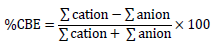
All samples exhibited a CBE within the acceptable limit of ±5%, confirming the analytical reliability of the ionic data [43].
Hydro-chemical and statistical approaches
Multivariate statistical analysis
To interpret the complex interrelationships among parameters and identify hidden contamination sources, a suite of multivariate statistical techniques was applied using SPSS (v.26.0) and R software. First, Pearson correlation analysis was performed to establish linear associations between physicochemical variables and PTEs. Subsequently, Principal Component Analysis (PCA) with Varimax rotation was employed to reduce data dimensionality and extract significant factors representing dominant geochemical processes and anthropogenic influences. The suitability of the data for PCA was confirmed by a Kaiser-Meyer-Olkin (KMO) measure > 0.6 and Bartlett’s test of sphericity (p<0.001). Finally, Hierarchical Cluster Analysis (HCA) using Ward’s linkage method with squared Euclidean distance was applied to classify the 60 sampling sites into distinct hydro-chemical groups based on overall similarity, providing insight into spatial patterns of water quality [44].
Geochemical modeling and graphical interpretation
The geochemical evolution and dominant processes controlling groundwater chemistry were interpreted using established graphical methods. Piper trilinear diagrams were constructed using Grapher (v.18) to classify water types (hydro-chemical facies) and visualize mixing trends [45]. Gibbs diagrams were employed to broadly assess the relative roles of atmospheric precipitation, rock weathering, and evaporation-crystallization in controlling solute acquisition [46]. These diagrams provide a foundational understanding of the aquifer’s baseline geochemistry, against which anthropogenic PTE anomalies can be evaluated.
Health risk assessment methodology
Human health risks associated with the ingestion of PTE-contaminated groundwater were evaluated for both adults and children following the integrated framework established by the United States Environmental Protection Agency (USEPA) [47][48]. The assessment considered chronic exposure via the drinking water pathway.
The first step involved calculating the Chronic Daily Intake (CDI, mg kg⁻¹ day⁻¹) for each metal using the standard equation:
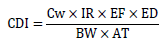
where Cw is the concentration of the metal in water (mg L⁻¹), IR is the ingestion rate (2 L day⁻¹ for adults, 0.5 L day⁻¹ for children), EF is the exposure frequency (365 days year⁻¹), ED is the exposure duration (30 years for non-carcinogens, 70 years for carcinogens), BW is the average body weight (70 kg for adults, 15 kg for children), and AT is the averaging time (ED × 365 days for non-carcinogens; 70 × 365 days for carcinogens) [49].
For non-carcinogenic risk, the Hazard Quotient (HQ) for each metal and the aggregate Hazard Index (HI) were calculated as:

where RfD is the oral reference dose (mg kg⁻¹ day⁻¹) obtained from the USEPA Integrated Risk Information System (IRIS). An HI > 1 indicates a potential for adverse non-carcinogenic effects.
For carcinogenic risk, the incremental lifetime cancer risk (CR) was estimated as:
CR = CDI × CSF
where CSF is the cancer slope factor (mg kg⁻¹ day⁻¹)⁻¹. Metals considered with carcinogenic potential were Cd (CSF = 6.1), Cr (VI) (CSF = 0.5), and Pb (CSF = 0.0085) [48]. Total carcinogenic risk was summed across these metals, with a risk range of 1×10⁻⁶ to 1×10⁻⁴ deemed acceptable by regulatory standards.
To account for variability and uncertainty in exposure parameters, a probabilistic risk assessment was conducted using Monte Carlo simulation (10,000 iterations) in @RISK (v.8.0). Key inputs (e.g., concentration, ingestion rate, body weight) were defined as probability distributions based on literature and measured data. Sensitivity analysis was performed to identify the parameters contributing most significantly to the variance in the final risk estimates.
Results
Hydro-chemical characteristics and spatial variation
Hydro-chemical analysis of the groundwater samples revealed significant differences in baseline water quality across the four urban centers, reflecting their distinct anthropogenic and hydrogeological settings (Tables 1 and 2).
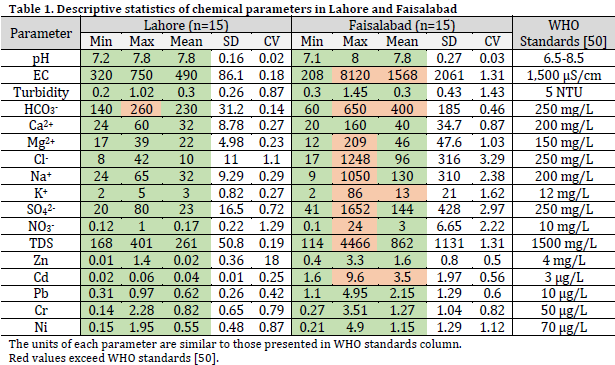
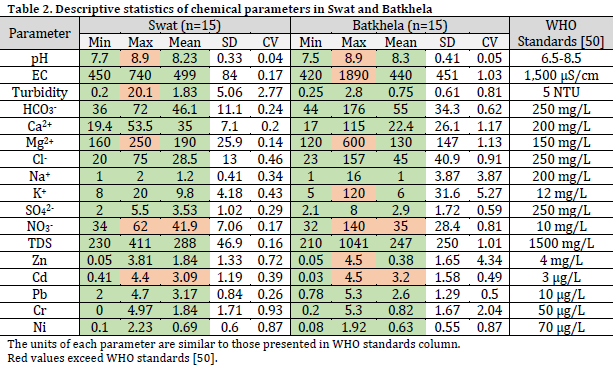
Groundwater across all regions was generally neutral to slightly alkaline, with pH values ranging from 7.10 to 8.90. Notably, samples from the northern cities of Swat and Batkhela exhibited higher mean alkalinity pH 8.23 ± 0.33 and 8.30 ± 0.41, respectively compared to those from Punjab. However, the most striking variations were observed in mineralization indices. EC and TDS displayed extreme variability, particularly in Faisalabad. Here, EC values spanned from 208 to 8,120 µS/cm, with a mean of 1,568 ± 2,061 µS/cm and TDS reaching a maximum of 4,466 mg/L far exceeding the WHO guideline of 1,500 mg/L. This indicates severe salinization, likely driven by industrial effluents and intensive irrigation return flows [51]. In contrast, Lahore and the northern cities showed relatively moderate mineralization, with mean TDS values below 300 mg/L.
The major ion composition further elucidated distinct contamination profiles. The dominance of HCO₃⁻ alongside elevated Ca²⁺ and Mg²⁺ in most samples suggests weathering of carbonate minerals as a primary natural solute source. However, anthropogenic overprints were clear. Faisalabad groundwater was characterized by exceptionally high and variable concentrations of Cl⁻ (96 ± 316 mg/L), SO₄²⁻ (144 ± 428 mg/L), and Na⁺ (130 ± 310 mg/L), pointing to inputs from industrial wastewater and saline intrusion. A critical public health concern emerged from NO₃⁻ analysis. Concentrations in Swat (41.9 ± 7.06 mg/L) and Batkhela (35.0 ± 28.4 mg/L) consistently surpassed the WHO limit of 10 mg/L by factors of 3 to 4, strongly implicating leaching from agricultural fertilizers and untreated sewage as predominant contamination pathways in these regions [52].
Contamination status of potentially toxic elements (PTEs)
Fluctuating contamination levels throughout the research sites were identified by the assessment of PTEs, with several elements in specific cities surpassed international safety guidelines (Tables 1 and 2).
Samples collected from northern and industrial municipalities showed Cd as a primary pollutant of concern. Average concentrations in Faisalabad (3.50 ± 1.97 µg/L), Batkhela (3.20 ± 1.58 µg/L), and Swat (3.09 ± 1.19 µg/L) were beyond the WHO threshold of 3 µg/L. These margins, ranging from 3% to 17%, indicate a steady although moderate presence of Cd in these locations. Conversely, Cd levels significantly under the allowed maximum (0.04 ± 0.01 µg/L) were recorded in Lahore.
All examined regions maintained Pb concentrations beneath the WHO limit of 10 µg/L. Average figures varied between 0.62 ± 0.26 µg/L in Lahore and 3.17 ± 0.84 µg/L in Swat. However, few extreme observations in some regions (approximately 5 µg/L in Batkhela and Faisalabad) necessitate ongoing observation, since long-term Pb exposure poses serious health risks.
The WHO standard of 50 µg/L stayed above the measured Cr levels. Mean values fluctuated from 0.82 ± 0.65 µg/L in Lahore to 1.84 ± 1.71 µg/L in Swat. Similarly, the standards defined for Ni (70 µg/L) and Zn (4 mg/L) were also met by most samples. Despite these general trends, occasional hotspots where concentrations spiked can be detected.
Significant heterogeneity characterized the spatial distribution of PTEs. Coefficients of variation (CV) that frequently surpassed 1.0 (100%) confirm this diversity. It can be deduced that localized, point-source pollution likely drives this substantial variance in Cd, Pb, and Cr. Therefore, specific industrial runoffs, waste dumps, or human-caused hotspots are identified as likely contributors [53][54].
Hydro-chemical facies and governing processes
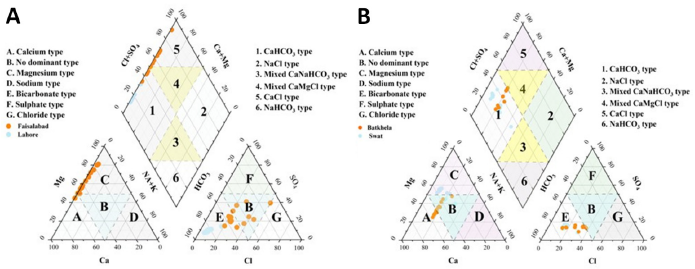
Four unique groundwater signatures were outlined by the hydrochemical facies analysis. Piper trilinear diagrams (Fig. 2) visually translate these patterns. The varied hydrogeological and human-made backgrounds of the evaluated city centers match these distinct groupings. A clear geochemical progression is uncovered by the assessment. This shift moves from a baseline of natural weathering to intense anthropogenic modification.
An advanced evolutionary condition was demonstrated by the groundwater in Faisalabad. The central diamond of the Piper diagram captured the majority of the plotted samples. These points fell inside the Ca-Cl (Zone 5). Additionally, a significant number of samples showed Mg cation dominance (Zone C) (Fig. 2 A). Anthropogenic salinization is definitively marked by this specific facies. Incoming saline industrial effluents have altered the natural hydrochemical pathway. Concentrated irrigation return-flows further drive this severe disruption.
A more transitional nature was exhibited by Lahore’s groundwater. The CaHCO3– type (Zone 1) and bicarbonate (Zone E) grouped the samples together (Fig 2 A). The weathering of carbonate and silicate minerals dictates the baseline chemistry here. Such weathering represents standard behavior for the alluvial aquifer.
Conversely, a stable and natural geochemical profile was established by the groundwater from Swat and Batkhela. The Ca-HCO3– (Zone 1) field uniformly captured the plotted samples from these northern municipalities (Fig. 2 B). Active recharge zones in carbonate-dominated terrains are typified by this facies. The Mixed / Sulphate signature observed in Swat reflects the specific geology of the northern mountainous region. Within these environments, the congruent dissolution of calcite and dolomite alters recently infiltrated precipitation. A homogeneous hydrogeological setting is implied by the tight clustering of the data points. Water-rock interaction remains the main controlling process across this region. The Piper diagrams display a clear spatial trend. This gradient spans from the pure Ca-HCO3– type in the north to the Ca-Cl type across central Punjab. Ultimately, a direct visual correlation between land use intensity and urban geochemical modification is supplied by this mapping.
The fundamental mechanisms dictating solute acquisition in groundwater networks were further clarified through the application of Gibbs ratio diagrams. These core processes encompass atmospheric precipitation, rock weathering, and evaporation (Fig. 3). The distinct contamination pathways previously recognized by the Piper diagrams are corroborated by these findings.
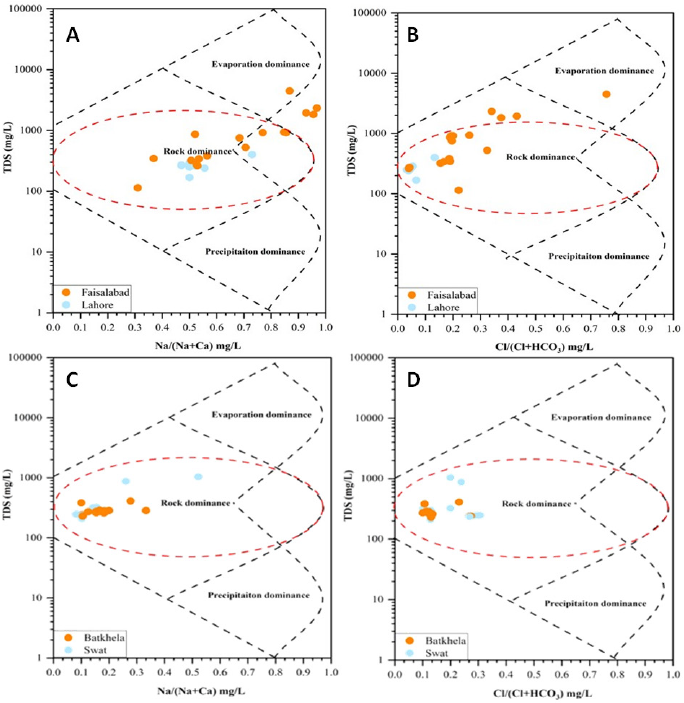
A sharp contrast between Faisalabad and the remaining municipalities is exposed by the findings. The majority of samples from all cities fall within the central “Rock dominance” zone. This indicates that rock weathering is the main process controlling the chemical composition of the water. However, extreme EC and TDS measurements observed in some samples from Faisalabad trend upward and right into the “Evaporation dominance” zone (Fig. 3 A and B). This suggests that for these specific samples, evaporation is concentrating salts and increasing sodium levels. These results confirm the intense accumulation of salts as the chief chemical driver, as arid territories regularly display this specific trend. Zones undergoing substantial evaporative enrichment also exhibit this behavior. Human actions, such as irrigation return flow and the vaporization of polluted, stagnant surface water, frequently accelerate this phenomenon [46][55].
An alternative controlling mechanism was exhibited by the aquifers in Lahore, Swat, and Batkhela. The rock dominance sector grouped the overwhelming bulk of specimens collected from these three locations. The weathering and breakdown of the aquifer’s resident minerals and rocks dictate the origin of major ions (Na⁺, K⁺, Ca²⁺, Mg²⁺, HCO₃⁻). Carbonates and silicates represent typical examples of these geological sources. Active hydrological networks characteristically establish this anticipated natural baseline.
Interpreting PTE pollution relies heavily upon this crucial division. The dissolution of the aquifer matrix does not naturally generate the concerning quantities of lead, cadmium, and chromium discovered across Lahore, Swat, and Batkhela. Rather, surface-level human operations introduce these hazardous elements as external contaminants. These foreign pollutants are subsequently layered over a baseline chemistry. Natural rock-water interactions otherwise dictate this underlying groundwater composition. Identical anthropogenic hydrologic conditions might simultaneously enrich major ions and PTEs throughout Faisalabad, however. The established evaporation dominance strongly implies this concurrent concentration [56][57].
Source apportionment using multivariate statistics
Correlation analysis
Significant linear relationships among the measured physicochemical parameters were revealed by the Pearson correlation matrix (Fig. 4). Initial insights into the co-variation and potential common contaminant sources within the groundwater are provided by these statistical findings.
Anthropogenic salinization generated a definitive and powerful statistical signal. Both EC and TDS exhibited strong positive correlations (r > 0.95) with Cl–, Na+, and SO42-. A unified contamination process is unequivocally indicated by this tightly bound cluster (EC, TDS, Cl–, Na+, and SO42-). These specific ions are collectively introduced into the aquifer through Industrial effluent, domestic wastewater, and saline irrigation return flows.

Agricultural influence was highlighted by a second, distinct correlation pattern. NO3– and Mg2+ shared a strong positive correlation (r = 0.93). Agricultural activity is heavily implicated by this robust association. Specifically, nitrogen-based and potentially magnesium-containing fertilizers act as the predominant source of nitrate contamination. Subsurface leaching serves as a key transport pathway to the groundwater for these compounds.
Common anthropogenic origins are suggested by several significant correlations among the PTEs. Moderate positive correlations with Pb (r = 0.54) and Zn (r = 0.33) were demonstrated by Cd. Similar sources likely produce these specific metals, as indicated by this pattern of co-occurrence. Mixed industrial discharges (e.g., metal plating and battery manufacturing), municipal waste leachate, or the weathering of imported construction materials represent probable origins. Furthermore, comparable geochemical mobility within the subsurface environment governs these elements [58][59].
Principal Component Analysis (PCA)
The primary mixing sources within the groundwater were clarified through Principal Component Analysis (PCA) (Fig. 5). The main contamination levels and natural processes are effectively captured by four significant factors. A total of 75.8% of the variation in water quality data is collectively explained by these factors.
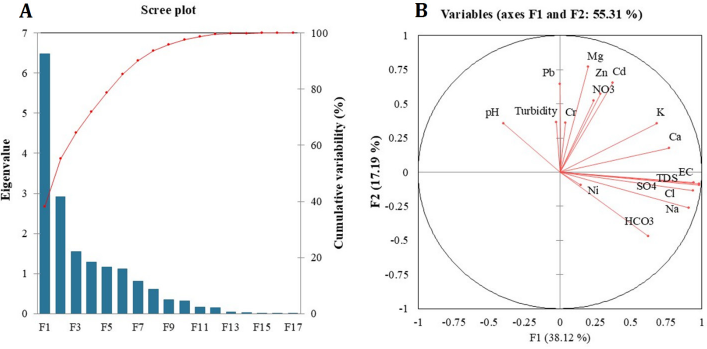
Human-made salinization (Factor 1) constituted the most dominant section with 38.2% of total variance explained by this component. EC, TDS, NaCl, and SO42- were positively clustered within this factor. Statistically, high salinity is almost always accompanied by this specific ion mixture. This chemical signature points directly toward the seepage of concentrated domestic and industrial wastewater, alongside evaporated irrigation water, into the aquifers. Faisalabad exhibited the strongest presence of this fingerprint. Consequently, the city’s water crisis is defined by this specific pollution.
Agricultural influence (Factor 2) created a second, distinct driver with 18.9% of the total variance generated by this element. A classic signature of fertilizer leaching from farmlands is represented by the paired elevation of NO3– and Mg. The severe NO3– pollution plaguing groundwater in Swat and Batkhela is directly explained by this agricultural runoff. Intense cultivation characterizes these specific regions [60].
Factor 3 (11.3% variance) uncovered a third concerning trend. Turbidity was bundled together with hazardous metals, including Cd, Pb, Cr, Ni, and Zn, by this component. The connection to water opacity remains crucial. Tiny particles of dust, industrial sludge, or eroded soil likely transport these attached metals. Uncontrolled discharges, atmospheric fallout, or refuse dumps act as the primary sources, rather than direct dissolution from bedrock.
Finally, the natural background process of carbonate rock weathering was highlighted by Factor 4 (7.4% variance). Bicarbonate and pH levels defined this final category. The base layer of regional water chemistry is established by this weathering process, being most visible across the northern cities. Subsequent contamination layers were eventually superimposed upon this natural foundation [61].
Hierarchical Cluster Analysis (HCA)
Hierarchical Cluster Analysis was applied to objectively group the 60 sampling locations based on the overall similarity of their hydrochemical profiles, providing a spatial validation of the contamination patterns identified by PCA. The resulting dendrogram (Fig. 6) clearly segregated the samples into four statistically distinct clusters C1-C4, which correspond directly to both geographic location and contamination severity.
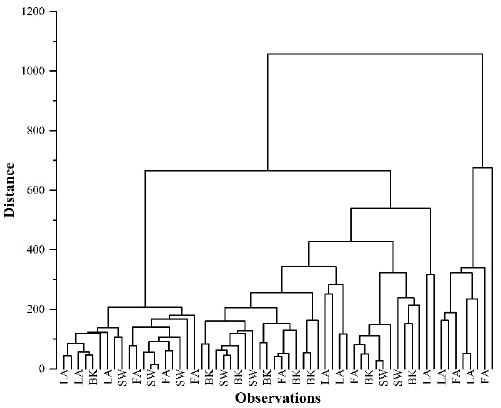
These four final clusters correspond directly to the spatial and contamination patterns identified throughout this study. Cluster 1 represented in the final stages predominantly comprises sites from Faisalabad, characterized by extreme contamination. Cluster 2 includes sites with mixed urban-industrial signatures, primarily from Lahore. The remaining clusters separate sites with moderate nitrate influence and those representing the natural background hydrochemistry of Swat and Batkhela. The HCA thus provides quantitative, spatial validation of the severe anthropogenic gradient across the urban centers [62].
Health risk assessment
Non-carcinogenic risk
The Hazard Quotient (HQ) and Hazard Index (HI) calculations (Table 3) quantify the potential non-carcinogenic health risks tied to long-term groundwater consumption across the evaluated urban centers. Varying risk levels are revealed across the four cities. Notably, HI values surpassed the USEPA safety threshold of 1 in three of the four study areas.
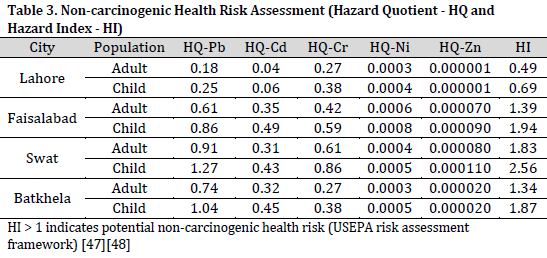
For the adult demographic, calculated HI values spanned from 0.49 in Lahore to 1.83 in Swat. These figures demonstrate that while Lahore presents no significant non-carcinogenic risk (HI < 1), adults in Faisalabad (HI = 1.39), Swat (HI = 1.83), and Batkhela (HI = 1.34) face potential health hazards from chronic exposure. Children, characterized by lower body weight and higher relative water intake, were found to be approximately 1.4 times more vulnerable than adults. Their HI values ranged from 0.69 in Lahore to 2.56 in Swat, breaching the safe limit in Faisalabad (HI = 1.94), Swat (HI = 2.56), and Batkhela (HI = 1.87).
Specific contaminants primarily drove this risk with Cd and Pb emerging as the dominant contributors to non-carcinogenic risk across most municipalities, jointly accounting for 60% to 75% of the total HI. In Swat, for example, these two metals alone generated an HI of 1.22 for adults. Cr also presented a notable non-carcinogenic threat, especially in Swat and Faisalabad, contributing HQs of 0.61 and 0.42 for adults, respectively. Conversely, contributions from Ni and Zn remained negligible across all studied regions.
The spatial pattern of this risk largely mirrors the established contamination gradient. The industrial hub of Faisalabad and the agriculturally influenced Swat valley present the highest HI values. Although Lahore’s groundwater appears to pose no significant non-carcinogenic risk, the elevated HI values observed throughout the remaining three cities demand continued monitoring and public health intervention. This vigilance is particularly crucial for children, who face the highest relative risk [63].
Carcinogenic risk health assessment
The Carcinogenic Risk (CR) assessment (Table 4) evaluates the lifetime cancer threat associated with chronic ingestion of groundwater contaminated with Pb, Cd, and Cr. The CR ranged from 3.96×10⁻⁴ for adults in Lahore to 3.36×10⁻³ for children in Faisalabad. These values indicate that the lifetime cancer risk exceeds the USEPA’s maximum acceptable regulatory limit of 1×10⁻⁴ by factors ranging from approximately 4 to 34, depending on the city and population group.
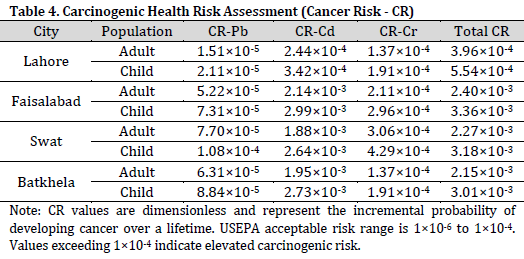
Cd was identified as the predominant carcinogenic driver, contributing over 85% of the total CR in most cities, owing to its elevated concentrations and potent cancer slope factor. Cr emerged as the secondary contributor, adding a moderate increment to the overall risk. Children consistently faced approximately 1.4 times higher carcinogenic risk than adults across all cities, reflecting their greater susceptibility due to higher relative water intake and lower body weight.
A probabilistic Monte Carlo simulation, accounting for variability in exposure parameters, was conducted to characterize uncertainty in the risk estimates. The 95th percentile risk estimates ranged from approximately 1×10⁻³ to 5×10⁻³, indicating that even under conservative assumptions, the risk remains above the USEPA threshold in Faisalabad, Swat, and Batkhela. Sensitivity analysis identified groundwater metal concentration as the most influential parameter, contributing 78% of the output variance, followed by daily ingestion rate at 15%. This underscores that source control to reduce contaminant concentrations is the most effective strategy for mitigating carcinogenic risk in these urban centers [25].
Discussion
Hydrochemical evolution and contamination pathways
The distinct hydrochemical facies identified across the study areas serve as a direct geochemical record of human impact on aquifer systems. The transformation of groundwater in Faisalabad to a dominant Ca-Cl type represents a profound departure from its natural alluvial aquifer evolution. This facies is a definitive marker of extreme anthropogenic salinization, a process where natural hydrochemical trajectories are overridden by the infiltration of concentrated ionic loads [64]. The source is likely the leaching of industrial wastewater rich in sodium, chloride, and sulfate from textile dyeing, chemical manufacturing, and metal processing, combined with saline irrigation return flows [65]. The strong correlations r > 0.95 among EC, TDS, Cl–, Na+, and SO42- provide quantitative confirmation that these ions originate from a unified contamination source, consistent with industrial and municipal effluent discharge.
Conversely, the consistent Ca-HCO3– facies in Swat and Batkhela confirms their hydrogeological setting as active recharge zones where recently infiltrated meteoric water undergoes congruent dissolution of carbonate minerals [66]. This indicates a system where natural rock-water interaction remains the primary control on major ion chemistry. However, the presence of severe nitrate contamination within these pristine facies reveals that a significant anthropogenic pollutant has been superimposed [67]. This illustrates how intensive agricultural practices, particularly fertilizer application, can degrade groundwater quality even in geochemically immature, fast-recharging systems.
Furthermore, the high coefficients of variation CV > 1 observed for most parameters, especially PTEs, are highly diagnostic. This pronounced spatial heterogeneity strongly argues against regionally elevated geogenic backgrounds as the primary cause of contamination. Instead, it points to localized, point-source contamination from specific anthropogenic hotspots such as industrial discharge points, unlined waste dumps, leaking sewage infrastructure, or small-scale industrial clusters [66]. This pattern suggests that remediation and monitoring efforts must be strategically targeted rather than applied uniformly across these urban landscapes.
Source apportionment: decoupling anthropogenic from geogenic signals
The application of multivariate statistics, particularly PCA, successfully disentangled the complex mixture of influences on groundwater chemistry, providing a quantitative framework for source identification. The dominance of Factor 1, accounting for 38.2% of the total variance, indicates that industrial and municipal wastewater is a significant driver of groundwater degradation in this study. This factor, with its high loadings on EC, TDS, Na+, Cl–, and SO42-, quantifies the ionic footprint of discharges from sectors such as textile processing, chemical manufacturing, and tanneries, which is prominently evident in Faisalabad’s groundwater [68].
Factor 2 isolates a diffuse but important contamination pathway. The strong pairing of NO3– and Mg2+ r = 0.93 is a recognized signature of fertilizer leaching. This association likely stems from the use of magnesium-containing fertilizers e.g., dolomitic lime or the geochemical co-mobilization of Mg2+ ions driven by the infiltration of nitrate solutions through the soil profile, a well-characterized process in agricultural settings [69]. This factor explains the elevated nitrate concentrations observed in the agricultural regions of Swat and Batkhela, despite their otherwise natural hydrochemical facies.
A finding with implications for risk management emerges from Factor 3. The co-loading of key PTEs (Cd, Pb, Cr, Ni, Zn) with turbidity indicates that these metals may not be primarily present as freely dissolved ions. Instead, they may be transported adsorbed onto fine suspended particles derived from sources such as industrial sludge, eroded contaminated soils, or atmospheric dust fallout [70]. This mechanistic insight suggests that point-of-use water treatment methods involving physical filtration could be effective in reducing human exposure to these toxic metals, offering a practical interim mitigation strategy.
The spatial validation provided by HCA reinforces these interpretations. The exclusive grouping of Faisalabad’s samples into Cluster C1, characterized by elevated salinity and metal content, geographically anchors the anthropogenic salinization factor. The separation of other clusters further distinguishes between sites influenced by PTE pollution and those influenced by nitrate, confirming that the statistical source apportionment reflects real-world patterns of contamination across the urban landscape.
A public health emergency: quantifying the risk
The geochemical data is translated into a quantitative evaluation of potential health impacts linked to long-term groundwater consumption through the health risk assessment. The non-carcinogenic HI values, ranging from 0.49 to 2.56, surpass the USEPA safety threshold of 1 across three of the four cities: Faisalabad, Swat, and Batkhela. This exceedance indicates a potential risk of systemic toxicity, encompassing possible neurological, renal, and developmental effects stemming from chronic exposure. The consistent finding that children face an approximately 40% higher risk than adults highlights the disproportionate vulnerability of this demographic. Their developing bodies remain inherently more susceptible to toxic insults.
Particular attention is warranted by the predominance of Pb and Cd as the primary drivers of non-carcinogenic risk. Cumulative neurotoxic and nephrotoxic effects characterize these elements, even at relatively low exposure levels [71]. A clear need for targeted biomonitoring and clinical attention within these communities is suggested by their dominance in the risk profile across Faisalabad, Swat, and Batkhela. Such interventions would better assess ongoing exposure and potential health outcomes.
The significance of the situation is further underscored by the CR estimates. Total CR values, ranging from 3.96 × 10⁻⁴ to 3.36 × 10⁻³, translate to an estimated 0.04% to 0.34% increased probability of developing cancer over a lifetime strictly from drinking water consumption. The USEPA’s maximum acceptable regulatory limit of 1 × 10⁻⁴ is exceeded by these risks by factors of approximately 4 to 34. The robustness of these findings is supported by the probabilistic Monte Carlo simulation. This analysis demonstrates that, even when accounting for variability in exposure factors, the 95th percentile estimates remain elevated and continue to exceed the USEPA threshold across the three high-risk cities.
Critically, a clear direction for intervention is provided by the sensitivity analysis. Groundwater metal concentration accounts for 78% of the variance in the calculated cancer risk. This observation underscores source control as the most effective strategy for risk mitigation. Regulatory efforts focused solely on monitoring, or a reliance on dilution, may prove insufficient according to this evidence. A necessary pathway for protecting public health in the affected urban centers involves prioritizing measures to reduce contaminant inputs from industrial and municipal sources, alongside dedicated investment in water treatment infrastructure.
Comparative context and temporal trends
The contamination levels documented in this study warrant comparison with previously reported data from the same regions. Pb concentrations in Swat mean 3.17 µg/L and Cd concentrations in Faisalabad mean 3.50 µg/L are generally consistent with or moderately elevated relative to earlier studies [72]. This suggests a potential trajectory of increasing contamination linked to urban and industrial growth, though further time-series data would be needed to confirm such trends definitively. When placed in a regional context, the health risks identified for residents of Faisalabad and Swat are comparable to or exceed those reported for industrialized areas in neighboring South Asian countries [73]. This comparative analysis suggests that groundwater quality in these Pakistani urban centers represents a significant public health concern that warrants attention from policymakers and water resource managers. The findings highlight the need for improved wastewater management practices, stricter enforcement of environmental regulations, and investment in alternative drinking water sources for affected communities.
Policy imperatives and pathways to mitigation
The empirical evidence presented in this study underscores the need for a strategic approach to Pakistan’s groundwater management. The widespread contamination has compromised a portion of the shallow urban groundwater resource, creating a direct challenge to water safety. To translate these scientific findings into actionable policy, a tiered and evidence-based strategy is essential.
First, immediate public health protection should be a priority. In identified high-risk zones, such as the highly contaminated Cluster C1 in Faisalabad, authorities should consider measures including the deployment of alternative safe water supplies and the distribution of certified point-of-use filtration systems capable of removing particulate-bound metals and pathogens. These represent stopgap measures to reduce ongoing exposure while longer-term solutions are developed.
Second, regulation and enforcement should be targeted based on source apportionment. A one-size-fits-all policy is unlikely to be effective. In industrial corridors such as Faisalabad and parts of Lahore, more focus should be concentrated on enforceable effluent standards for high-risk industries, backed by monitoring and penalties for non-compliance. Strategic industrial zoning may help separate pollution sources from critical aquifer recharge areas. In agricultural regions such as Swat and Batkhela, policy should promote nutrient management plans to optimize fertilizer use, incentivize the construction of vegetative buffer strips to intercept nitrate-rich runoff, and protect recharge zones from encroachment and pollution.
Third, technology deployment should leverage the specific contamination mechanisms identified. The finding that metals are largely particulate-bound is promising for remediation. Promoting and subsidizing decentralized water treatment technologies, such as ceramic filters or activated carbon units, can provide a household-level barrier. This should be accompanied by investment in centralized treatment infrastructure for piped supplies.
Finally, sustainable solutions require coordination across institutional boundaries. An integrated water resource management (IWRM) framework is critical. This framework should link the permitting decisions of environmental protection agencies, the extension services of agricultural departments, the master plans of urban development authorities, and the surveillance programs of public health departments [74]. Groundwater quality should become a central metric in evaluating development projects and urban growth. Through such an integrated, source-to-tap approach, the cycle of contamination can be addressed and water security restored.
Conclusion
Groundwater quality in four urban centers in Pakistan (Lahore, Faisalabad, Swat, and Batkhela) was evaluated through a combination of hydrochemical analysis and probabilistic health risk assessment. Distinct anthropogenic pressures and hydrogeological settings are reflected in the varying contamination levels identified across these regions. This data highlights how human activity shapes local water chemistry.
A precise gradient of human impact is delineated by the research. Elevated salinization and trace metal contamination, specifically Cd and Pb, were observed in Faisalabad due to its intensive industrial profile. Moderate metal levels and high nitrate concentrations were recorded in the developing agricultural zones of Swat and Batkhela. These results point toward significant inputs from farming activities. Although the impact was less severe in Lahore, localized contamination was identified. This necessitates ongoing surveillance of the city’s aquifers.
Three primary sources (industrial and municipal wastewater, agricultural runoff, and particulate-bound metal discharges) were identified through multivariate statistical approaches. A framework for targeted intervention strategies is established by this source apportionment.
Quantitative indicators of potential health concerns were generated by the health risk assessment. The USEPA safety threshold of 1 for non-carcinogenic HI was exceeded in three regions. Values reached 1.94 in Faisalabad, 2.56 in Swat, and 1.87 in Batkhela for children, whereas Lahore remained within safe limits. The USEPA limit of 1×10⁻⁴ was surpassed by CR estimates, which ranged from 3.96×10⁻⁴ to 3.36×10⁻³. These figures exceed acceptable standards by roughly 4 to 34 times. Heightened public health attention is warranted by these findings. While not catastrophic, the risks are particularly concerning for children, who face a disproportionate burden.
Degraded groundwater quality in these urban centers is driven by current patterns of industrial effluent, agricultural practices, and municipal waste management. Stronger regulatory enforcement, investment in treatment infrastructure, and targeted source control measures are required to address these challenges. A scientifically informed roadmap for mitigation is provided by the recommendations. These include implementing region-specific management frameworks and adopting advanced water treatment technologies.
A transferable approach for assessing groundwater contamination in urban settings is offered by the integrated methodology developed here. This work supports global efforts to mitigate the degradation of urban water supplies.
Acknowledgements
The authors sincerely thank Asmat Ali and Abdur Rasheed for their thoughtful and constructive feedback, which has significantly improved the overall quality of this manuscript.
Conflict of interest statement
The authors declared no conflict of interest.
Funding statement
The authors declared that no funding was received in relation to this manuscript.
Data availability statement
The authors declared that all experimental data related to this work will be available upon reasonable request from the corresponding author.
References
- Ishtiaq M, Khan MJ, Khan SA, Ghani J, Ullah Z, Nawab J, Alrefaei AF, Almutairi MH, Alharbi SN. Potentially harmful elements and health risk assessment in groundwater of urban industrial areas. Front. Environ. Sci. 2024;12:1332965. DOI
- Panda G, Pobi KK, Gangopadhyay S, Gope M, Rai AK, Nayek S. Contamination level, source identification and health risk evaluation of potentially toxic elements (PTEs) in groundwater of an industrial city in eastern India. Environ. Geochem. Health. 2021;44(8):2685-709. DOI
- Nawab J, Khan S, Xiaoping W, Rahman A, Ali H, Qamar Z, Khan ZA, Rehman ZU, Rahman H, Muhammad J. Spatial distribution of toxic metals in drinking water sources and their associated health risk in district buner, Northern Pakistan. Hum. Ecol. Risk Assess. Int. J. 2017;24(3):615-26. DOI
- Abdelkareem M, Mansour AM, Akawy A. Securing water for arid regions: Rainwater harvesting and sustainable groundwater management using remote sensing and GIS techniques. Remote Sens. Appl. Soc. Environ. 2024;36:101300. DOI
- Qaisrani A, Umar MA, Siyal GEA, Salik KM. What Defines Livelihood Vulnerability in Rural Semi-Arid Areas? Evidence from Pakistan. Earth Syst. Environ. 2018;2(3):455-75. DOI
- Mukherjee A, Scanlon BR, Aureli A, Langan S, Guo H, McKenzie AA. Global groundwater: source, scarcity, sustainability, security, and solutions. Elsevier. 2020.
- Taylor R, Aureli A, Allen D, Banks D, Villholth K, Stigter T. Chapter 7: Groundwater, aquifers and climate change. In: The United Nations World Water Development Report 2022: Groundwater: Making the Invisible Visible. Series: UN World Water Development Report. UNESCO: Paris, France. 2022:101-14.
- Mukherjee S, Patel AK, Kumar M. Water Scarcity and Land Degradation Nexus in the Anthropocene: Reformations for Advanced Water Management as Per the Sustainable Development Goals. In: Springer Transactions in Civil and Environmental Engineering. Springer Singapore. 2019. DOI
- Rashid A, Ayub M, Khan S, Ullah Z, Ali L, Gao X, Li C, El-Serehy HA, Kaushik P, Rasool A. Hydrogeochemical assessment of carcinogenic and non-carcinogenic health risks of potentially toxic elements in aquifers of the Hindukush ranges, Pakistan: insights from groundwater pollution indexing, GIS-based, and multivariate statistical approaches. Environ. Sci. Pollut. Res. 2022;29(50):75744-68. DOI
- Ali MM, Hossain D, Shanila FA, Saud B, Hossen S, Manon MRK, Lawal JT, Baidya P, Begum M, Bristi SZT. A Poisoned Paradise: The Threat of Heavy Metals in Our Aquatic Water Bodies. In: Global Perspectives of Toxic Metals in Bio Environs. Springer Nature Switzerland. 2025. DOI
- Neumann A, Bakour I, Filella M, Mestrot A, Voegelin A, Wiggenhauser M. Environmental Biogeochemistry of Trace and Major Elements. In: Symposium 4: Environmental Biogeochemistry of Trace and Major Elements. Swiss Geoscience Meeting. 2025.
- De S, Maiti A. Arsenic removal from contaminated groundwater. The Energy and Resources Institute (TERI). 2012.
- Kar S. Geochemical Characteristics of Mineral Elements: Arsenic, Fluorine, Lead, Nitrogen, and Carbon. In: Structure and Functions of Pedosphere. Springer Nature Singapore. 2022. DOI
- Onipe T, Edokpayi JN, Odiyo JO. A review on the potential sources and health implications of fluoride in groundwater of Sub-Saharan Africa. J. Environ. Sci. Health Part A. 2020;55(9):1078-93. DOI
- Rehman UU, Khan S, Muhammad S. Associations of potentially toxic elements (PTEs) in drinking water and human biomarkers: a case study from five districts of Pakistan. Environ. Sci. Pollut. Res. 2018;25(28):27912-23. DOI
- Ali L, Rashid A, Khattak SA, Zeb M, Jehan S. Geochemical control of potential toxic elements (PTEs), associated risk exposure and source apportionment of agricultural soil in Southern Chitral, Pakistan. Microchem. J. 2019;147:516-23. DOI
- Kamal GM, Rehmani MN, Iqbal SZ, Uddin J, Nazir S, Rehman JU, Hussain AI, Mousavi Khaneghah A. The determination of potentially toxic elements (PTEs) in milk from the Southern Cities of Punjab, Pakistan: A health risk assessment study. J. Food Compos. Anal. 2022;108:104446. DOI
- Saddique U, Muhammad S, Tariq M, Zhang H, Arif M, Jadoon IAK, Khattak NU. Potentially toxic elements in soil of the Khyber Pakhtunkhwa province and Tribal areas, Pakistan: evaluation for human and ecological risk assessment. Environ. Geochem. Health. 2018;40(5):2177-90. DOI
- Nawab J, Din ZU, Ahmad R, Khan S, Zafar MI, Faisal S, Raziq W, Khan H, Rahman ZU, Ali A. Occurrence, distribution, and pollution indices of potentially toxic elements within the bed sediments of the riverine system in Pakistan. Environ. Sci. Pollut. Res. 2021;28(39):54986-5002. DOI
- Ullah R, Muhammad S. Potentially toxic elements contamination, risk assessment via consumption, and spatial distribution of pollution and evaluation indices in the alpine lakes, Pakistan. Int. J. Environ. Anal. Chem. 2022;104(16):4013-26. DOI
- Ghani J, Nawab J, Ullah Z, Rafiq N, Hasan SZ, Khan S, Shah M, Almutairi MH. Multivariate Statistical Methods and GIS-Based Evaluation of Potable Water in Urban Children’s Parks Due to Potentially Toxic Elements Contamination: A Children’s Health Risk Assessment Study in a Developing Country. Sustainability. 2023;15(17):13177. DOI
- Naeem M, Aftab T, Ali Ansari A, Gill SS, Macovei A. Hazardous and Trace Materials in Soil and Plants: Sources, Effects, and Management. Elsevier. 2022. DOI
- Ali A, Ullah Z, Ismaeel N, Rashid A, Khalid W, Siddique M, Iqbal J, Khan A, Waqas M, Ghani J. Integrated Approach to Hydrogeochemical Assessment of Groundwater Quality in Major Industrial Zone of Punjab, Pakistan. Environ. Sci. Pollut. Res. 2024;31(23):34396-414. DOI
- Murtaza G, Usman M. Assessment of various heavy metals level in groundwater and soil at tannery manufacturing areas of three mega cities (Sialkot, Lahore and Karachi) of Pakistan. Desalin. Water Treat. 2022;266:121-30. DOI
- Khan K, Younas M, Sharif HMA, Wang C, Yaseen M, Cao X, Zhou Y, Ibrahim SM, Yvette B, Lu Y. Heavy metals contamination, potential pathways and risks along the Indus Drainage System of Pakistan. Sci. Total Environ. 2022;809:151994. DOI
- Khan K, Mohsin A, Sharif HMA, Maryam A, Ali J, Li X, Ibrahim SM, Ayaz M, Zhou Y, Younas M. Heavy metal pollution in the soil of a riverine basin: distribution, source, and potential hazards. Environ. Monit. Assess. 2022;194(9):618. DOI
- Rashid A, Khan S, Ayub M, Sardar T, Jehan S, Zahir S, Khan MS, Muhammad J, Khan R, Ali A. Mapping human health risk from exposure to potential toxic metal contamination in groundwater of Lower Dir, Pakistan: Application of multivariate and geographical information system. Chemosphere. 2019;225:785-95. DOI
- Ullah I, Akhtar S, Jehan T, Adnan M, Sardar T, Khan N, Nawab J. Toxic Risk Profiling of Potentially Toxic Elements in Coal Mines of Northern Pakistan and Their Phytoremediation from Soil: A Multivariate and Monte Carlo Simulation Approach. Soil Sediment Contam. Int. J. 2025:1-31. DOI
- Aslam RA, Shrestha S, Usman MN, Khan SN, Ali S, Sharif MS, Sarwar MW, Saddique N, Sarwar A, Ali MU. Integrated SWAT-MODFLOW Modeling-Based Groundwater Adaptation Policy Guidelines for Lahore, Pakistan under Projected Climate Change, and Human Development Scenarios. Atmosphere. 2022;13(12):2001. DOI
- Ali MH, Aleem M, Saddique N, Anjum L, Khan MI, Aslam RA, Akbar MU, Mao M, Sarwar A, Subtain Abbas SM. Spatiotemporal Analysis of Groundwater Storage Changes and Its Driving Factors in the Semi-Arid Region of the Lower Chenab Canal. Hydrology. 2025;12(12):330. DOI
- Lytton L, Ali A, Garthwaite B, Punthakey JF, Saeed B. Groundwater in Pakistan’s Indus Basin: Present and Future Prospects. World Bank, Washington, DC. 2021. DOI
- Jabeen M, Ahmad Z, Ashraf A. Predicting behaviour of the Indus basin aquifer susceptible to degraded environment in the Punjab province, Pakistan. Model. Earth Syst. Environ. 2020;6(3):1633-44. DOI
- Khan I, Singh A, Jamal Y. Hydrogeochemical Dynamics of Groundwater in the Punjab Region of the Indo-Gangetic Plains: An Entropy-Weighted and Geochemical Modeling Approach. Earth Syst. Environ. 2025;10(2):1437-60. DOI
- Attaullah, Iqbal N, Khan GN, Yousafzai AM, Karimullah. Incidence of dengue virus eruption in Swat, Khyber Pakhtunkhwa, Pakistan. Asian Pac. J. Trop. Dis. 2017;7(3):129-31. DOI
- Khan M. The arid zone of West Pakistan: geographical aspects of aridity in West Pakistan. Doctoral dissertation, Durham University. 1961.
- Nafees M, Rukh L. An Overview of the Environmental Challenges Facing the River Swat in the Context of Climate Change. Report number 16, University of Peshawar. 2025.
- Buneri S. Swat valley: The metamorphosis. Tribal Analysis Center. 2012.
- Jan MA. The Emergence and Transformation of Batkhela Bazaar (Pakistan). J. South Asian Dev. 2017;12(3):308-30. DOI
- Seiler KP, Gat JR. Groundwater recharge from run-off, infiltration and percolation. Springer Dordrecht. 2007. DOI
- Nawab J, Khan S, Xiaoping W. Ecological and health risk assessment of potentially toxic elements in the major rivers of Pakistan: General population vs. Fishermen. Chemosphere. 2018;202:154-64. DOI
- Onana ABA, Ngassam SY, Mfonka Z, Onana AAN, Ngoupayou JRN. Water quality and human health risk assessment of nitrate in the SAO watershed (West, Cameroon). Discov. Geosci. 2025;3(1):114. DOI
- Nawab J, Farooqi S, Xiaoping W, Khan S, Khan A. Levels, dietary intake, and health risk of potentially toxic metals in vegetables, fruits, and cereal crops in Pakistan. Environ. Sci. Pollut. Res. 2017;25(6):5558-71. DOI
- Khan S, Shamshad I, Waqas M, Nawab J, Ming L. Remediating industrial wastewater containing potentially toxic elements with four freshwater algae. Ecol. Eng. 2017;102:536-41. DOI
- Qamar Z, Khan S, Khan A, Aamir M, Nawab J, Waqas M. Appraisement, source apportionment and health risk of polycyclic aromatic hydrocarbons (PAHs) in vehicle-wash wastewater, Pakistan. Sci. Total Environ. 2017;605-606:106-13. DOI
- Piper AM. A graphic procedure in the geochemical interpretation of water‐analyses. Eos Trans. Am. Geophys. Union. 1944;25(6):914-28. DOI
- Gibbs RJ. Mechanisms Controlling World Water Chemistry. Science. 1970;170(3962):1088-90. DOI
- Fitzpatrick J, Schoeny R, Gallagher K, Deener K, Dockins C, Firestone M, Jordan W, McDonough M, Murphy D, Olsen M. US Environmental Protection Agency’s framework for human health risk assessment to inform decision making. Int. J. Risk Assess. Manag. 2017;20(1/2/3):3. DOI
- US Environmental Protection Agency (EPA). National management measures to control nonpoint source pollution from urban areas. Environmental Protection Agency, Cincinnati. 2005.
- Isaac IU. Assessing Health and Safety Risk of Heavy Metals in Microplastics in Surface Water of Otuoke, Niger Delta, Nigeria. International Journal of Applied Science and Mathematical Theory. 2025;11(2):111-25.
- WHO. Guidelines for drinking-water quality, 4th edition. WHO chronicle. 2011.
- Rahman M, Penny G, Mondal M, Zaman M, Kryston A, Salehin M, Nahar Q, Islam M, Bolster D, Tank J. Salinization in large river deltas: Drivers, impacts and socio-hydrological feedbacks. Water Secur. 2019;6:100024. DOI
- Tariq A, Mushtaq A. Untreated wastewater reasons and causes: A review of most affected areas and cities. Int. J. Chem. Biochem. Sci. 2023;23(1):121-43.
- An J, Zha X, Wang H, Deng L, Yang Y, Wang Y, Di J, Zhao W. Analysis of Influencing Factors of Heavy Metals and Non-Point Source Pollution in Typical Areas of Tethys Himalayan Tectonic Domain. Water. 2024;16(2):291. DOI
- Sabat M, Jabali Y, Millet M, Khoury D. Spatio-temporal assessment and source identification of heavy metals in the Abou Ali River, North Lebanon. Environ. Challenges 2025;21:101349. DOI
- Gottlieb D, Shu C. On the Gibbs Phenomenon and Its Resolution. SIAM Rev. 1997;39(4):644-68. DOI
- Gharaat MJ, Mohammadi Z, Rezanezhad F. Distribution and origin of potentially toxic elements in a multi-aquifer system. Environ. Sci. Pollut. Res. 2020;27(35):43724-42. DOI
- Nieder R, Benbi DK. Potentially toxic elements in the environment – a review of sources, sinks, pathways and mitigation measures. Rev. Environ. Health. 2023;39(3):561-75. DOI
- Ilyas M, Ahmad W, Khan H, Yousaf S, Yasir M, Khan A. Environmental and health impacts of industrial wastewater effluents in Pakistan: a review. Rev. Environ. Health. 2019;34(2):171-86. DOI
- Ullah Z, Khan H, Waseem A, Mahmood Q, Farooq U. Water quality assessment of the River Kabul at Peshawar, Pakistan: Industrial and urban wastewater impacts. J. Water Chem. Technol. 2013;35(4):170-6. DOI
- Hina NS. Using Spatially Explicit Soil Mapping and Modelling to Understand and Mitigate Nitrate Leaching in an Agricultural Catchment. Doctoral dissertation, Newcastle University. 2022.
- Fatima SU, Khan MA, Siddiqui F, Mahmood N, Salman N, Alamgir A, Shaukat SS. Geospatial assessment of water quality using principal components analysis (PCA) and water quality index (WQI) in Basho Valley, Gilgit Baltistan (Northern Areas of Pakistan). Environ. Monit. Assess. 2022;194(3):151. DOI
- Ahmad T, Muhammad S, Umar M, Azhar MU, Ahmed A, Ahmad A, Ullah R. Correction: Spatial distribution of physicochemical parameters and drinking and irrigation water quality indices in the Jhelum River. Environ. Geochem. Health. 2024;46(9):362. DOI
- Khan K. Environmental Concentrations of Heavy Metals and their Health Impacts in Swat, Pakistan. Doctoral dissertation, University of Peshawar. 2013.
- Khan AF, Srinivasamoorthy K, Rabina C. Hydrochemical characteristics and quality assessment of groundwater along the coastal tracts of Tamil Nadu and Puducherry, India. Appl. Water Sci. 2020;10(2):74. DOI
- Waseem A, Arshad J, Iqbal F, Sajjad A, Mehmood Z, Murtaza G. Pollution Status of Pakistan: A Retrospective Review on Heavy Metal Contamination of Water, Soil, and Vegetables. BioMed Res. Int. 2014;2014:1-29. DOI
- Rehman Zu, Khan S, Shah Mt, Brusseau Ml, Khan Sa, Mainhagu J. Transfer of Heavy Metals from Soils to Vegetables and Associated Human Health Risks at Selected Sites in Pakistan. Pedosphere. 2018;28(4):666-79. DOI
- Afzaal M, Hameed S, Liaqat I, Ali Khan AA, abdul Manan H, Shahid R, Altaf M. Heavy metals contamination in water, sediments and fish of freshwater ecosystems in Pakistan. Water Pract. Technol. 2022;17(5):1253-72. DOI
- Huang J, Kang S, Yin R, Lin M, Guo J, Ram K, Li C, Sharma C, Tripathee L, Sun S, Wang F. Decoupling natural and anthropogenic mercury and lead transport from South Asia to the Himalayas. Environ. Sci. Technol. 2020;54(9):5429-36. DOI
- Rashid A, Ayub M, Ullah Z, Ali A, Sardar T, Iqbal J, Gao X, Bundschuh J, Li C, Khattak SA. Groundwater Quality, Health Risk Assessment, and Source Distribution of Heavy Metals Contamination around Chromite Mines: Application of GIS, Sustainable Groundwater Management, Geostatistics, PCAMLR, and PMF Receptor Model. Int. J. Environ. Res. Public Health 2023;20(3):2113. DOI
- Sheikh HA, Maher BA, Karloukovski V, Lampronti GI, Harrison R. Biomagnetic characterisation of air pollution particulates in Lahore, Pakistan. Authorea Preprints. 2022.
- Chowdhury FN, Rahman MM. Source and Distribution of Heavy Metal and Their Effects on Human Health. In: Environmental Science and Engineering. Springer Nature Switzerland. 2024:45-98. DOI
- Khan K, Khan H, Lu Y, Ihsanullah I, Nawab J, Khan S, Shah NS, Shamshad I, Maryam A. Evaluation of toxicological risk of foodstuffs contaminated with heavy metals in Swat, Pakistan. Ecotoxicol. Environ. Saf. 2014;108:224-32. DOI
- Bashir MH, Asif A, Ahmad HR, Abbas A, Shehzad MT. Spatio-temporal assessment of heavy metal contamination in groundwater along Madhuana drain, Faisalabad: source apportionment and health risk analysis. Environ. Geochem. Health. 2025;47(7):251. DOI
- Anees M, Yan W. An overview about the challenges of urban expansion on environmental health in Pakistan. J. Energy Environ. Policy Options. 2019;2(3):64-71.
Cite this article:
Khan GM, Nawab J, Abbas H, Ayaz M, Rahman A, Ullah H, Ahmad S, Ali A. Hydrochemical source apportionment and health risk assessment of potentially toxic elements in groundwater across four urban centers of Pakistan. DYSONA-Applied Science. 2026 Jul 1;7(2):269-89. doi: 10.30493/das.2026.012604