
Celestine Ezenwosu 1*
1, Department of Animal Science, University of Nigeria, Nsukka, Nigeria
E-mail:
celestine.ezenwosu@unn.edu.ng
Received: 26/05/2026
Acceptance: 12/11/2026
Available Online: 13/11/2026
Published: 01/01/2027
Manuscript link
http://doi.org/10.30493/DAS.2026.011311
Abstract
Broiler production in tropical climates is faced with several challenges, especially heat stress, which disrupts production by impairing gastrointestinal integrity and nutrient absorption. Researchers are currently evaluating diverse strategies to alleviate the negative impacts of thermal stress on broilers, with dietary supplementation emerging as a prominent intervention. A six-week feeding trial using 300 Anak strain broiler chickens in a 3×2 factorial experiment evaluated natural mitigation strategies. Dietary kaolin (0, 20, and 40 g/kg feed) and ascorbic acid (0 and 1000 mg/kg feed) supplementation was investigated for individual and interactive effects on growth performance, apparent nutrient digestibility, carcass traits, and hematological profiles under tropical conditions. The results indicated that dietary supplementation significantly improved final body weight, weight gain, feed conversion ratio, and nutrient digestibility compared to un-supplemented controls. Superior growth performance, enhanced carcass characteristics, and reduced feed cost per kilogram gain were exhibited by birds receiving combinations of kaolin (20–40 g kaolin/kg feed) and ascorbic acid (1000 mg ascorbic acid/kg feed). Systemic toxicity was absent, as confirmed by hematological indices remaining within normal physiological reference ranges across all treatment groups. The study shows that heat-induced stress can be effectively mitigated while enhancing nutrient utilization and optimizing productive efficiency in broiler chickens reared in tropical environments through the dietary inclusion of kaolin and ascorbic acid.
Keywords: Broiler, Kaolin, Ascorbic acid, Heat stress, Growth performance
Introduction
Global population expansion has driven broiler poultry production into a central role for animal protein supply, fiscal growth, and food security, particularly across developing nations [1]. Extreme tropical climates, however, consistently trigger physiological disruptions in broiler operations despite the sector’s vital contribution to sustainable protein production [2]. Among these environmental challenges in tropical Africa, elevated temperatures induce severe heat stress in birds. This thermal stress degrades gastrointestinal tract integrity, which subsequently impairs the nutrient absorption required for growth and development [3]. For that reason, heat stress represents one of the most perilous environmental hazards facing poultry production, causing major financial losses globally [4][5]. Productive performance, immune responsiveness, cellular energy bioavailability, and systemic homeostasis in birds are all adversely altered under these conditions [6]. Multiple trials confirm that heat stress depresses feed intake, feed efficiency, and overall weight gain in poultry [7], with basic survival physiologically prioritized over growth processes under these conditions [8].
Contemporary research trends in animal production increasingly emphasize natural substances over synthetic compounds. Eco-friendly dietary additives that fortify antioxidant defenses, enhance gut health, and improve nutrient absorption offer a strategic solution for profitable, sustainable broiler production in tropical regions [9].
Ascorbic acid (Vitamin C) represents one such viable feed additive. During infection and oxidative challenge, ascorbic acid functions as a primary antioxidant in poultry [10]. Under heat stress, Vitamin C supports cellular energy dynamics through corticosterone biosynthesis [11]. This antioxidant activity plays a crucial role in mitigating heat-induced oxidative damage. Consequently, feed supplementation with ascorbic acid has been used to alleviate thermal stress, boost immune function, and enhance both growth rates and meat quality [12].
Kaolin, a widely available and cost-effective natural clay mineral, can similarly be integrated into poultry diets to boost productivity [13]. Clay minerals such as kaolin are formally recognized as technological feed additives in livestock nutrition [14]. Their application in animal husbandry promotes growth and performance by improving nutrient digestibility and systemic absorption [14]. Since clay minerals align naturally with animal ingestion behaviors and offer broad physiological benefits, their inclusion in livestock production [15] and pharmaceutical formulations [16] has expanded. Dietary kaolin enhances bird health, meat quality, feed intake, nutrient digestion, and metabolic rates; it also stabilizes feed quality, provides trace vitamins and minerals, adsorbs toxins, and reduces gastrointestinal disorders [17].
To foster sustainable, environmentally safe broiler production, this investigation evaluated the effects of ascorbic acid and kaolin supplementation on growth performance, apparent nutrient digestibility, carcass traits, and hematological profiles of broiler chickens raised under tropical conditions. Ultimately, this research addresses key operational bottlenecks in tropical poultry farming, specifically the ongoing productional challenges of heat stress.
Material and Methods
Experimental site and duration of the study
Research protocols complied with the institutional ethical standards established on November 13, 2013, by the University of Nigeria, Nsukka (Approval No: AGRIC/ANS/076/2023). Trials were conducted at the Poultry Teaching Farm of the University of Nigeria over a six-week duration. A total of 300 two-week-old mixed-sex Anak strain broiler chickens were initially weighed using an electronic scale. These birds were randomly allocated into six dietary treatments using a 3×2 factorial arrangement within a completely randomized design. Each treatment comprised five replications of 10 broilers. The design incorporated three inclusion levels of kaolin (0, 20, and 40 g/kg feed) and two inclusion levels of ascorbic acid (0 and 1000 mg/kg feed). The combinations of the aforementioned inclusion levels resulted in the following treatments: T1 (0 g kaolin + 0 mg ascorbic acid/kg), T2 (20 g kaolin + 0 mg ascorbic acid/kg), T3 (40 g kaolin + 0 mg ascorbic acid/kg), T4 (0 g kaolin + 1000 mg ascorbic acid/kg), T5 (20 g kaolin + 1000 mg ascorbic acid/kg), and T6 (40 g kaolin + 1000 mg ascorbic acid/kg). The feeding trial was conducted over a period of six consecutive weeks.
Management of the birds
Upon arrival, drinking water supplemented with a vitamin-mineral anti-stress formula (VP1000) was provided to the birds for three initial days. Routine vaccination protocols against Newcastle disease and Gumboro disease were administered across all experimental units. A commercial starter diet in crumble form was offered during the two-week brood phase, followed by a finisher diet for the remaining four weeks. Birds received feed and water ad libitum throughout the 42-day trial. Strict biosecurity measures, including restricted access to the facility, were maintained to safeguard flock health. Moreover, daily clinical monitoring for symptoms of disease was conducted by a veterinarian.
Housing consisted of 4×4 m experimental pens arranged within an open-sided deep litter building. Ambient housing temperatures were monitored using standard thermometers and maintained at a baseline of 25°C, reflective of the study area’s typical ambient range of 25.4°C to 28.1°C. Concurrently, relative humidity fluctuated between 65% and 70%. These environmental parameters established mild to moderate thermal stress conditions for the experimental birds throughout the trial. Continuous access to fresh water and feed was provided for the duration of the 42-day study. Supplemental nighttime illumination was provided exclusively during the initial two-week starter period using 200-watt white incandescent bulbs.
Experimental diets and used material
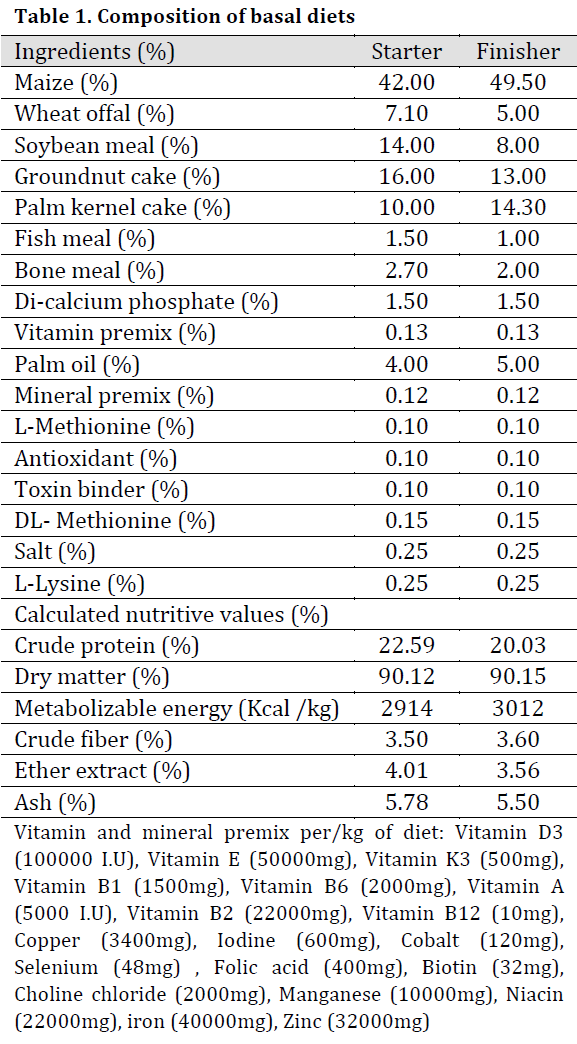
Basal feed constituents are presented in Table 1. Moisture content, crude fat, ash, and crude fiber were quantified via the Official Methods of Analysis of the Association of Official Analytical Chemists (AOAC) [18]. Crude protein values were measured using the Kjeldahl procedure. Diet energy content was subsequently determined using an Adiabatic Oxygen Bomb calorimeter (12149, PARR Instrument Co., Illinois).
Kaolin is an odorless white, gray, or yellowish powder, which chemically consists of a hydrous aluminosilicate clay mineral with the formula Al2O3(SiO2)2(H2O)2, containing silicon, aluminum, oxygen, and hydrogen as core elements. Additional mineral oxides such as calcium, magnesium, titanium, and iron are also present. On the other hand, Ascorbic acid is defined by the chemical formula C6H8O6. Trusted local sources in Imo State, Nigeria, supplied the kaolin and Ascorbic acid. Both additives were kept at ambient temperature and maintained separate from the initial feed preparation.
Growth performance assessment
Initial body weights were measured before trial commencement using an electronic scale, with subsequent bird weights recorded at weekly intervals. Feed mass was recorded prior to distribution to quantify daily consumption. Daily feed intake was determined by subtracting residual feed in the troughs each morning from the initial mass supplied, dividing the resulting difference by the bird count per experimental unit. Feed conversion ratio (FCR) was calculated by dividing total feed consumption by body weight gain. Average daily feed intake (ADFI) and average daily weight gain (ADWG) were established by dividing total feed intake and total weight gain, respectively, by the duration of the trial in days. Feed cost per kg gain was calculated as the product of feed cost per kg and FCR.
Hematological analysis
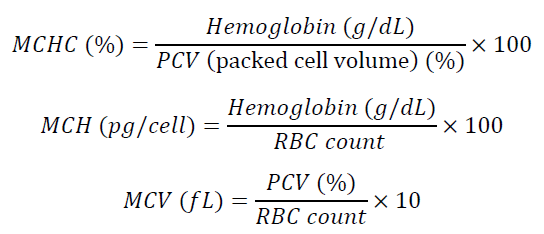
Upon trial completion, two birds were randomly selected from each replicate, and 5 mL blood samples were harvested for hematological analysis. Collected samples were transferred immediately into labeled vials containing EDTA anticoagulant. An automated cell counter determined red blood cell count, hemoglobin concentration, and total white blood cell count within 24 hours of collection. Packed cell volume (PCV) and lymphocyte differentials were measured using a Neubauer hemocytometer. Mean corpuscular volume (MCV), mean corpuscular hemoglobin (MCH), and mean corpuscular hemoglobin concentration (MCHC) were calculated using standard mathematical formulas:
Evaluation of carcass and organ characteristics
On the final day of the study, five birds were selected from each replicate for carcass and organ evaluations. Individual body weights were recorded prior to slaughter via an external throat cut. The butchered broilers were briefly immersed in warm water, allowing gentle feather removal to prevent skin tearing. Following plucking, the de-feathered carcasses were weighed. Birds were then meticulously dissected: the gastrointestinal tract was carefully extracted, and individual internal organs were removed and isolated. The remaining eviscerated carcasses underwent systematic dissection. Each body part was weighed independently on an electronic balance, with values recorded in grams. Dissection tools were disinfected in ethanol after processing each bird.
Apparent nutrient digestibility
For the apparent nutrient digestibility analysis, three broilers were randomly selected from each replicate at trial completion and housed in clean metabolic cages. Specific quantities of the treatment diets were supplied during a five-day adaptation phase, followed by a four-day collection of fecal material. Collected bird droppings were dried in an airtight oven at 65°C until a constant weight was reached, after which samples were ground through a 1 mm mesh screen. Proximate compositions of the provided feed and harvested fecal samples were analyzed according to standard procedures [18]. Apparent digestibility percentages for dry matter, crude protein, crude fiber, and ether extract were calculated using the following equation:

Statistical analysis
The collected data were subjected to a two-way analysis of variance (ANOVA). Mean differences were separated using Duncan’s New Multiple Range Test (DNMRT) in IBM SPSS Statistics version 28, with statistical significance accepted at a probability level of p<0.05.
Results and Discussion
Kaolin and ascorbic acid effects on growth performance
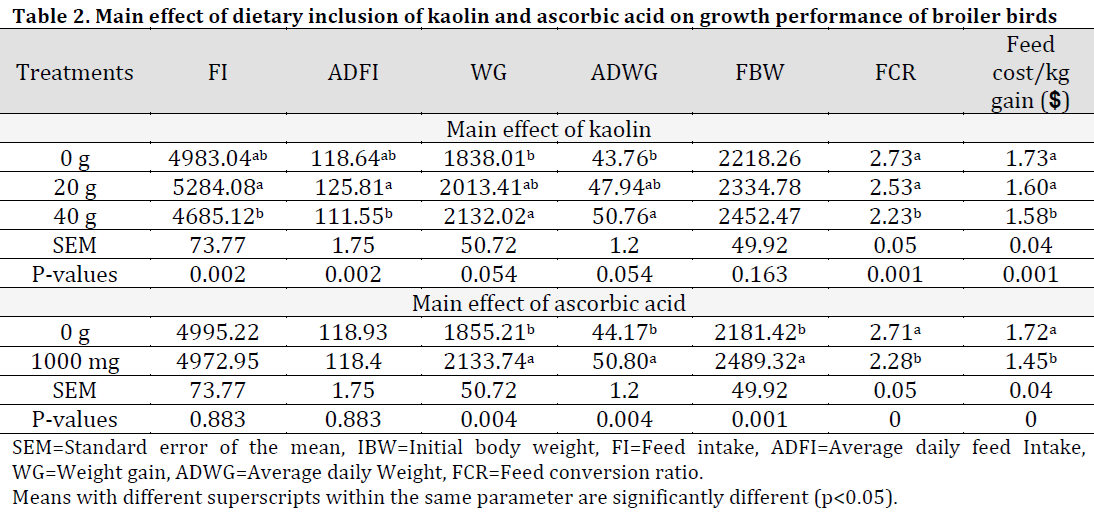
The main effects of dietary kaolin and ascorbic acid inclusion on broiler growth performance are demonstrated in Table 2 and Table 3. Significant differences emerged across mean values for feed intake, average daily feed intake (ADFI), weight gain (WG), average daily weight gain (ADWG), final body weight (FBW), and feed conversion ratio (FCR). Birds receiving 40 g kaolin/kg exhibited the lowest feed intake and ADFI, which did not differ significantly from the control diet. Conversely, the control group recorded the lowest values for WG and ADWG, showing statistical equivalence to the 20 g kaolin/kg treatment. The 40 g kaolin/kg inclusion yielded the lowest FCR and feed cost per kilogram gain. Dietary ascorbic acid did not influence feed intake or ADFI, whereas WG, ADWG, and FCR responded significantly. The 1000 mg/kg ascorbic acid level produced the highest WG, ADWG, and FBW, alongside the lowest FCR and feed cost per kilogram gain. Table 3 illustrates the interaction effects of kaolin and ascorbic acid on performance metrics. Statistically significant differences were observed for feed intake, ADFI, WG, ADWG, feed cost per kilogram gain, and FCR. Broilers on treatments T3, T4, and T6 consumed less feed than other groups. Higher WG, ADWG, and FBW occurred in treatments T5 and T6 relative to the remaining cohorts. Treatments T1 and T2 yielded higher FCR and feed cost per kilogram gain compared to other diets. Evaluated collectively, growth metrics and feed efficiency indices reflect the biological efficacy of these dietary additives. The observed improvements in weight gain, ADFI, FCR, and feed cost per kilogram gain favor the supplemented groups, likely resulting from the combined physiological effects of kaolin and ascorbic acid.
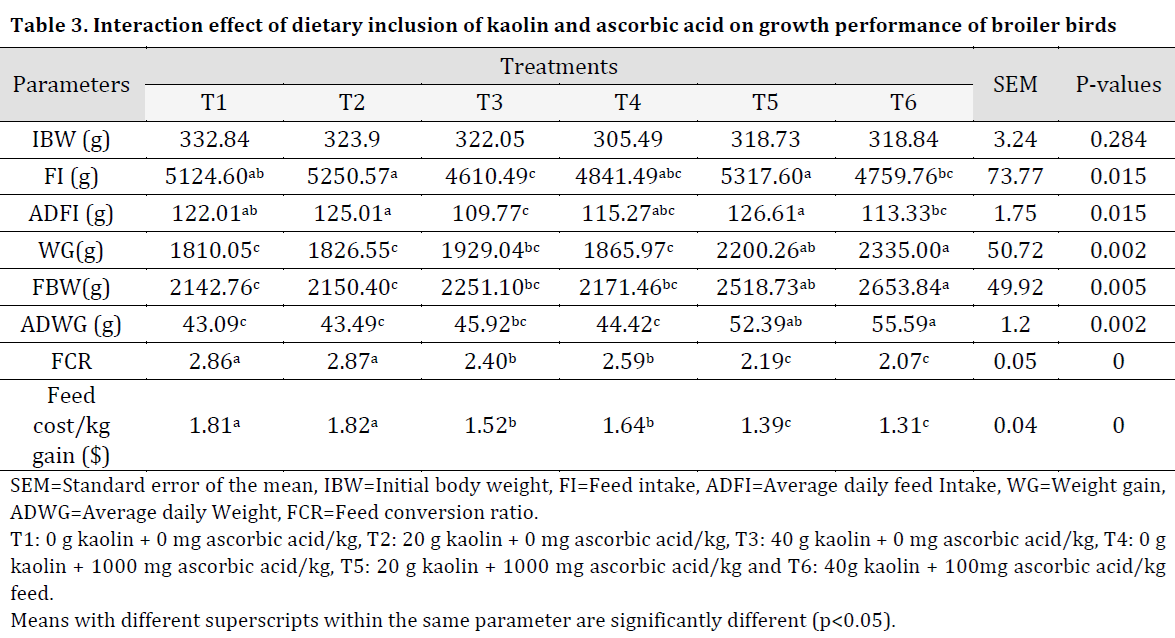
These findings align with other reports [13][19], wherein dietary clay minerals such as sodium bentonite and kaolin enhanced body weight gain and feed efficiency. Kaolin administration elevates gastrointestinal enzyme secretion and catalytic activity [20]. From a digestive perspective, kaolin absorbs luminal moisture, increasing digesta viscosity and delaying passage through the gastrointestinal tract [21]. This prolonged transit time provides additional duration for nutrient absorption, thereby supporting tissue deposition. Clay-rich diets can also elevate luminal enzyme concentrations, facilitating the digestion and absorption of lipids, proteins, and carbohydrates to enhance productive yield [22].
Additionally, weight gain in kaolin-supplemented broilers may stem from alterations in gastrointestinal pH. Elevating gut pH toward 6 enhances the bioavailability and transport of specific cations across the mucosal membrane, promoting weight gain. Previous research indicated that clay minerals expand jejunal villus height, widening the surface area available for nutrient absorption [23]. Intestinal villi function as the primary structural interface for nutrient uptake in livestock [24]. By expanding villus height in the small intestine, kaolin increases total absorptive surface area over time. This morphological adaptation offers a plausible mechanism for the superior growth indices and reduced feed cost per kilogram gain observed in treatment groups relative to controls. Furthermore, broilers in treatments T3 and T6 (40 g kaolin/kg) consumed less feed than other experimental groups. The viscous properties of kaolin slow digesta movement along the gastrointestinal tract, which likely induced early satiety and reduced voluntary feed intake in these birds [25][26].
The enhanced body weight, ADWG, FCR, and cost efficiency in ascorbic acid-supplemented broilers further reflect the metabolic benefits of vitamin C in poultry physiology. These observations agree with previous studies highlighting the role of ascorbic acid in maintaining feed efficiency and growth during environmental heat stress [27][28]. Vitamins serve as essential micro-nutrients required for diverse physiological and biochemical pathways. Dietary supplementation with ascorbic acid mitigates metabolic stress indicators, boosts immune status, reduces mortality, and supports growth [30]. Consequently, the antioxidant capacity of ascorbic acid likely explains the improved growth performance of supplemented broilers relative to the control group.
Oxidative stress impairs physiological processes during high environmental temperatures, compromising overall growth [31]. The radical-scavenging properties of ascorbic acid attenuate oxidative damage, protecting cellular structures and sustaining growth trajectory. Ascorbic acid also participates in the biosynthesis of corticosterone, a steroid hormone crucial for modulating energy metabolism during stressful conditions [32]. Supplementation enables broilers to sustain growth potential during heat exposure by supporting energetic homeostasis. Furthermore, vitamin C stabilizes systemic pH and reduces respiratory alkalosis, a physiological imbalance triggered by severe hyperventilation in heat-stressed poultry [32]. By mitigating oxidative stress, ascorbic acid assists birds in utilizing dietary nutrients to fulfill their genetic potential for growth. In heat-stressed broilers, it was reported that ascorbic acid supplementation elevated feeding activity and weight gain while diminishing distress behaviors [33]. This evidence indicates that ascorbic acid enhances growth performance while simultaneously improving animal welfare.
Moreover, ascorbic acid improves nutrient absorption and utilization, key factors for achieving target growth and feed conversion ratios. As noted by [34], broilers supplemented with ascorbic acid demonstrated improved FCR and weight gain, reflecting heightened metabolic efficiency. Multiple studies further confirm that ascorbic acid enhances intestinal morphology, directly impacting protein and carbohydrate metabolism, nutrient uptake, and overall productivity [35]. In contrast, un-supplemented control birds exhibited elevated FCR and lower weight gain values. These adverse outcomes stem from the unmitigated physiological impact of heat stress, which depresses growth rate and impairs feed conversion efficiency in poultry [36].
Kaolin and ascorbic acid effects on carcass characteristics
Table 4 illustrates the interaction effects of dietary kaolin and ascorbic acid on the carcass characteristics of broiler chickens. Significant differences occurred across mean values for live weight, dress weight, small intestine weight, small intestine length, and the weights of the head, neck, wing, shank, and thigh. Conversely, dietary interactions exerted no significant effect on spleen, proventriculus, gizzard, or kidney weights. Broilers on treatment T1 exhibited the lowest live weights, showing statistical equivalence to groups T2, T3, and T5. Treatment T1 also yielded the lowest values for dressed carcass, wing, and thigh weights across all groups. Birds receiving treatment T2 recorded the lowest head, shank, and drumstick weights, whereas treatment T4 resulted in the lowest neck, liver, and breast weights. The lowest small intestine weight and length occurred in treatment T1 compared to other experimental groups. Overall, broilers fed kaolin and ascorbic acid diets demonstrated superior carcass traits relative to those on the control diet.
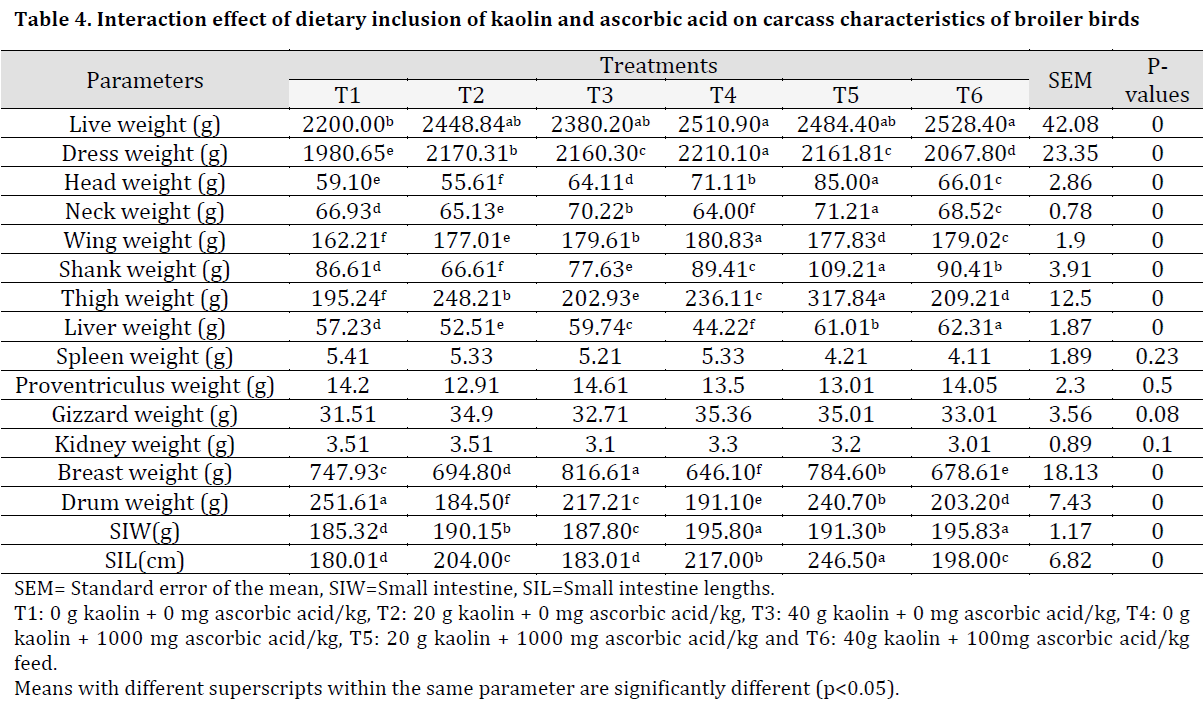
Enhanced carcass yield correlates directly with superior growth performance, reflecting adequate nutrient utilization and muscle tissue deposition. The improved carcass yield observed in kaolin-fed broilers likely stems from the ability of kaolin to enhance nutrient digestibility, thereby increasing metabolic substrate availability for tissue growth [37]. Diets supplying sufficient essential nutrients enable farm animals to achieve appropriate tissue deposition and structural development. Furthermore, the increased weight and length of the small intestine in supplemented groups may reflect heightened energetic support for enterocyte proliferation. Kaolin facilitates this response through improved nutrient digestibility, which stimulates crypt cell mitosis [38]. By maximizing nutrient uptake, dietary kaolin ultimately enhances overall carcass yield. The efficacy of kaolin in driving carcass yield also relates to its rich mineral profile, including macro-minerals (calcium, sodium, magnesium) and micro-minerals (iodine, selenium, iron, zinc), which support essential enzymatic and hormonal pathways involved in growth [39].
Additionally, ascorbic acid improves carcass yield by enhancing nutrient absorption and metabolic efficiency. This improvement occurs primarily through heat stress mitigation and immune enhancement. It was previously reported that broiler chickens receiving ascorbic acid supplementation exhibited higher weight gain, which directly translates to improved carcass yield relative to slower-growing birds [34]. The carcass improvements in the present study align with previous reports that observed enhanced carcass metrics in broilers supplemented with dietary kaolin [13] and ascorbic acid [34] compared to control groups.
In contrast, the reduction in small intestine length in control birds likely relates to decreased intestinal fill thickness alongside reduced crypt cell generation rates [40]. Gastrointestinal shortening may also stem from decreased viscosity of intestinal contents, reduced cecal volatile fatty acid absorption, and accelerated digesta transit time driven by increased aqueous dilution [40].
Kaolin and ascorbic acid effects on hematological indices
Table 5 presents the interaction effects of dietary kaolin and ascorbic acid on the hematological indices of broiler chickens. Significant differences occurred across treatments for Packed cell volume (PCV), Hemoglobin (Hb), Mean corpuscular volume (MCV), White blood cell (WBC), and Lymphocytes. On the other hand, no significant differences were observed between treatments in terms of Red blood cell (RBC), Mean corpuscular hemoglobin (MCH), Mean corpuscular hemoglobin concentration (MCHC), Monocyte, and Eosinophils. T4 (0 g kaolin + 1000 mg ascorbic acid/kg) recorded the highest hemoglobin concentration among treatments (11.9 g/dl), while the lowest value was observed in control (8.26 g/dl) and T6 (9 g/dl). Control (T1) surpassed all other treatments in terms of MCV (92 fl), WBC (25.33×10³/mm3) and lymphocyte (45.16) counts.
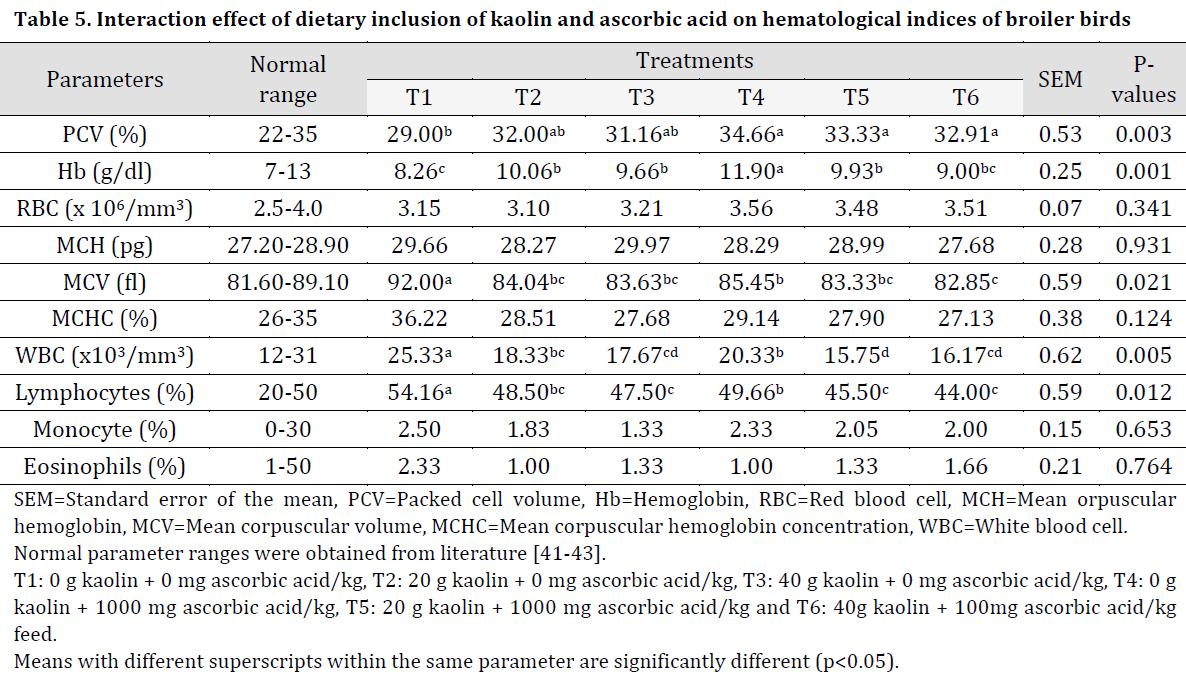
Across all treatment groups, blood parameter values remained within established physiological reference ranges for healthy chickens [41-43]. These outcomes indicate that the tested dietary levels of kaolin and ascorbic acid caused no systemic toxicity. Nevertheless, hematological profiling in test animals serves as a sensitive diagnostic approach to identify subclinical physiological disruptions that impair animal welfare before physical symptoms manifest [44]. As noted by [45], blood constituents provide a reliable baseline for assessing overall physiological health.
Although primary parameters such as RBC, PCV, and Hb remained within reference norms, supplemented groups consistently displayed higher values than controls. These trends align with prior findings where kaolin supplementation lowered WBC counts while marginally elevating PCV, RBC, and Hb levels [46]. Packed cell volume measures the proportion of erythrocytes relative to total blood volume [47]. PCV plays an essential role in oxygen transportation and systemic nutrient distribution to target tissues. Similarly, red blood cell metrics provide insights into total hemoglobin content and average erythrocyte size. Erythrocytes transport oxygen to tissues to fuel oxidative energy production while clearing carbon dioxide waste [48], alongside driving hemoglobin synthesis.
Although PCV values in this trial remained within physiological bounds, excessive PCV elevation above reference thresholds typically signals a surge in circulating red cell mass or a reduction in plasma volume, often triggered by chronic respiratory pathology [49]. Elevated PCV can also indicate iron overload disorders, rickets, or autonomous nonhypoxic erythropoietin secretion [50]. Furthermore, a PCV reading above 56% serves as a primary clinical marker of severe dehydration in avian species. In the current study, no PCV value exceeded 34.66%, which aligned with established broiler reference ranges [51][52].
Fluctuations in RBC, Hb, and PCV can also reflect metabolic energy adjustments in poultry [53]. Multiple factors influence hematological variables, including physiological state, environmental conditions, age, breed, sex, diet, and disease exposure [54]. From a nutritional perspective, the higher PCV, Hb, and RBC values in kaolin- and ascorbic acid-fed groups likely stem from enhanced utilization of dietary components and bioactive minerals in kaolin. Both sex and dietary composition exert a strong influence on baseline erythrocyte ranges in poultry [55]. Dietary iron is an essential precursor for hemoglobin synthesis, and adequate iron intake directly supports robust erythropoiesis [56]. Clay minerals like kaolin contain essential elements, including magnesium, zinc, sodium, iron, potassium, calcium, and nickel [57]. These minerals increase the bioavailability, absorption, and metabolic utilization of trace elements [24], enabling birds to maximize nutrient efficiency for hemoglobin synthesis and erythrocyte production [58]. Consequently, the reduced PCV and hemoglobin levels in control birds likely reflect reduced dietary nutrient utilization. Conversely, the elevated mean PCV, hemoglobin, and RBC values in supplemented groups suggest an enhanced oxygen-carrying capacity in systemic circulation.
Mean WBC counts remained within normal physiological ranges of 12,000–30,000 /µL [41], though the control group exhibited relatively elevated levels. White blood cells defend the host against pathogenic invasion through antibody production and immune responses. The higher WBC count in control birds may relate to greater microbial loads in the floor litter [19]. Litter quality remains a critical factor in poultry management, as damp bedding serves as a vector and reservoir for bacterial, viral, and parasitic pathogens [59]. High microbial burdens in litter expose birds to persistent pathogenic challenges, triggering compensatory leukocyte production. According to [19], incorporating clay minerals like sodium bentonite into broiler diets significantly reduces litter pathogen counts.
In addition to infectious pressure, environmental stress can trigger elevated WBC, MCV, and lymphocyte counts. Consequently, monitoring these parameters provides a reliable indicator of systemic stress exposure. The higher MCV, WBC, and lymphocyte counts observed in control birds likely reflect heightened physiological stress. MCV measures average erythrocyte volume, and stress responses routinely elevate circulating WBCs, lymphocytes, and MCV. Control birds likely experienced a greater impact from thermal stress during the trial than supplemented groups. Furthermore, the lower hemoglobin levels in un-supplemented controls suggest higher vulnerability to environmental stressors [60].
The reduced WBC, MCV, and lymphocyte counts in ascorbic acid-supplemented groups highlight the protective role of vitamin C against oxidative stress [61]. As a potent antioxidant, ascorbic acid neutralizes cytotoxic free radicals, blunting heat-induced oxidative damage and maintaining cellular structural integrity [62][63].
Kaolin and ascorbic acid effects on nutrient digestibility
Table 6 presents the main effects of dietary kaolin on the apparent nutrient digestibility of broiler chickens. Statistically significant differences occurred across values for dry matter, crude protein, crude fiber, and crude fat digestibility. Dry matter digestibility percentages in birds receiving 20 g kaolin/kg and 40 g kaolin/kg surpassed the baseline value of 73.33% recorded in the control group. The percentage digestibility values for crude protein, crude fiber, and crude fat exhibited patterns parallel to dry matter digestibility. Table 6 also outlines the main effects of ascorbic acid on apparent nutrient digestibility (%). Apparent digestibility values for dry matter, crude protein, crude fiber, and crude fat differed significantly, with ascorbic acid-supplemented birds showing higher values than those on the control diet.
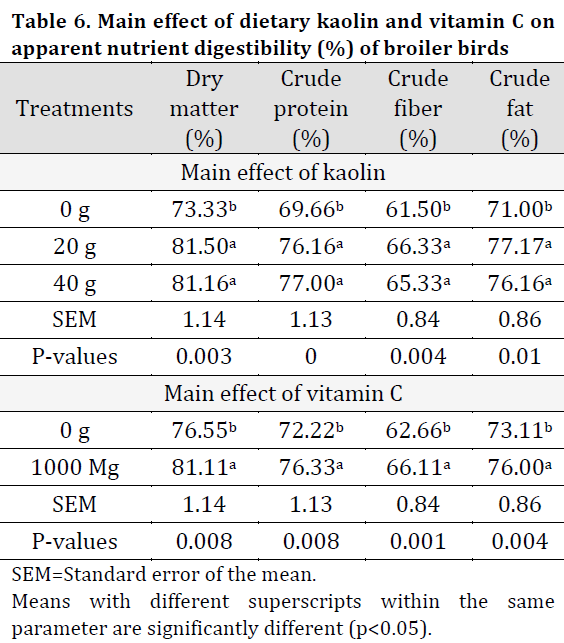
Table 7 displays the interaction effects of kaolin and ascorbic acid on apparent nutrient digestibility in broiler chickens. Experimental treatments exerted a significant influence on mean percentage values for dry matter, crude protein, crude fiber, and crude fat digestibility. Apparent dry matter digestibility in control birds (T1) was statistically equivalent to treatment T4; both remained lower than the 77.33%, 80.00%, 85.66%, and 82.33% recorded for groups T2, T3, T5, and T6, respectively. Crude protein digestibility in birds receiving T1, T2, and T4 showed statistical equivalence, remaining below the 76.33%, 80.66%, and 77.77% observed in groups T3, T5, and T6. Crude fiber digestibility in treatments T1 to T4 did not differ significantly, though all four groups remained substantially below the 69.33% and 66.66% recorded for T5 and T6. As for crude fat digestibility, the treatment T5 yielded higher value (80.66%) than other treatments.
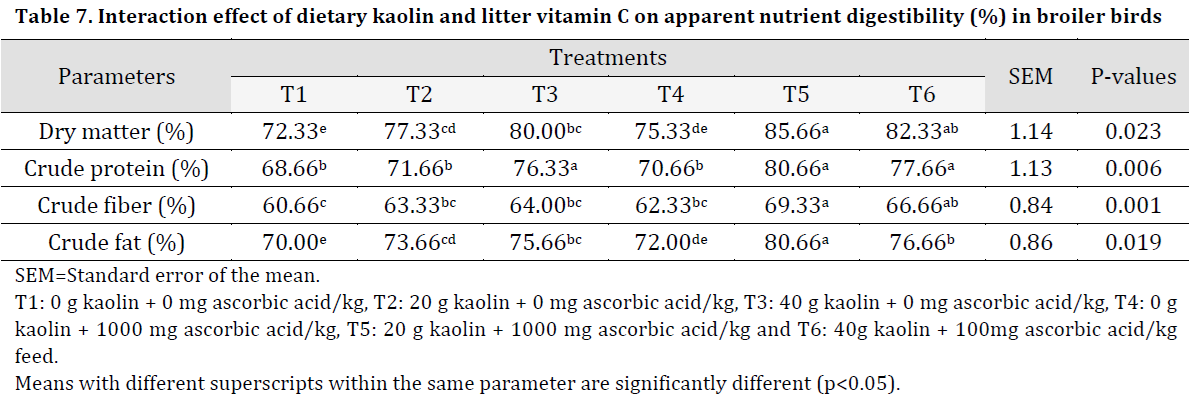
Overall, kaolin-supplemented broilers exhibited superior apparent nutrient digestibility compared to un-supplemented controls. These results align with previous research reporting enhanced nutrient digestibility in broilers fed kaolin diets relative to control groups [37]. The heightened apparent digestibility observed in supplemented groups likely stems from enhanced gastrointestinal integrity [64]. Gastrointestinal morphology directly influences feed degradation and nutrient absorption, as maintaining gut health optimizes digestive efficacy. Kaolin strengthens intestinal structural integrity by sequestering harmful metabolic compounds and neutralizing pathogens within the digestive tract [65]. By absorbing or neutralizing enteric pathogens that induce mucosal damage, kaolin preserves the intestinal epithelium and mucosal barrier, thereby enhancing nutrient digestibility [66]. Furthermore, kaolin exhibits immunomodulatory and antimicrobial properties [67][68]. Research indicates that incorporating clay minerals like kaolin into poultry diets improves nutrient digestibility by prolonging digesta retention time within the gastrointestinal tract, thereby exposing feed particles to extended enzymatic action [20]. Dietary clay supplementation further enhances nutrient digestibility by expanding the functional surface area of the gastrointestinal tract [69].
This improved apparent digestibility may also relate to the positive impact of kaolin on endogenous enzyme activities. Dietary clay minerals enhance both the secretion and catalytic activity of gastrointestinal enzymes [70]. Specifically, metallic cations abundant within the porous lattice of kaolin function as cofactors, stimulating the secretion and structural stabilization of key digestive enzymes such as xylanases, proteases, and lipases [71].
Additionally, the enhanced digestibility observed in treatment groups relative to controls reflects the metabolic contributions of dietary ascorbic acid. As demonstrated by [34], ascorbic acid supplementation improves nutrient digestibility and retention in broiler chickens compared to control diets. Ascorbic acid promotes weight gain by mitigating oxidative stress and sustaining metabolic energy pathways, particularly under hyperthermic conditions [72]. Beyond its primary radical-scavenging capacity [73], ascorbic acid preserves gut health by reducing mucosal inflammation [10] and maintaining a balanced enteric microbiota. Microbial homeostasis remains essential for efficient nutrient breakdown and tissue accretion. Consequently, dietary ascorbic acid supplementation in poultry production alleviates the physiological disruptions caused by thermal stress, enhancing growth performance, feed intake, carcass yield, and survivability [74]. Hence, the enhanced apparent nutrient digestibility driven by augmented enzyme activity and improved gut integrity, likely explains the superior growth performance and feed efficiency observed in birds fed kaolin and ascorbic acid.
Conclusions
A six-week feeding trial was conducted to evaluate the effects of dietary inclusion of kaolin and ascorbic acid on the growth performance, hematological indices, and apparent nutrient digestibility of broiler chickens raised under tropical conditions. Statistically significant differences occurred among treatment groups for mean feed intake (FI), average daily feed intake (ADFI), weight gain (WG), average daily weight gain (ADWG), final body weight (FBW), feed cost per kilogram gain, and feed conversion ratio (FCR). Broilers receiving treatment T6 (40g kaolin + 100mg ascorbic acid/kg feed) achieved the highest weight gain across all experimental groups, demonstrating statistical equivalence to birds on treatment T5 (20 g kaolin + 1000 mg ascorbic acid/kg feed). Conversely, broilers on treatments T1 (control) and T2 (20 g kaolin + 0 mg ascorbic acid/kg feed) recorded the highest values for FCR and feed cost per kilogram gain. Furthermore, un-supplemented control birds exhibited the lowest baseline values for hematological metrics, apparent nutrient digestibility (%), and carcass characteristics. Overall, dietary supplementation with kaolin and ascorbic acid enhanced broiler growth performance without compromising avian health or physiological welfare. Consequently, incorporating 40 g kaolin and 1000 mg ascorbic acid per kilogram of diet represents an effective strategy to optimize health, performance indices, and carcass yield in broiler chickens reared in tropical environments.
Conflict of interest statement
The author declared no conflict of interest.
Funding statement
The author declared that no funding was received in relation to this manuscript.
Data availability statement
The author stated that all experimental data used in this study will be made available upon reasonable request.
References
- Nassar FS. Strategic role of poultry production sciences in shaping the future of global food security and strengthen sustainability. Poult. Sci. 2026;105(5):106617. DOI
- Oke OE, Akosile OA, Uyanga VA, Oke FO, Oni AI, Tona K, Onagbesan OM. Climate change and broiler production. Vet. Med. Sci. 2024;10(3):e1416. DOI
- Patra AK, Kar I. Heat stress on microbiota composition, barrier integrity, and nutrient transport in gut, production performance, and its amelioration in farm animals. J. Anim. Sci. Technol. 2021;63(2):211-47. DOI
- Sun S, Li B, Wu M, Deng Y, Li J, Xiong Y, He S. Effect of dietary supplemental vitamin C and betaine on the growth performance, humoral immunity, immune organ index, and antioxidant status of broilers under heat stress. Trop. Anim. Health Prod. 2023;55(2):96. DOI
- Wasti S, Sah N, Mishra B. Impact of Heat Stress on Poultry Health and Performances, and Potential Mitigation Strategies. Animals. 2020;10(8):1266. DOI
- Wang Y, Yang X, Li S, Wu Q, Guo H, Wang H, Su P, Wang J. Research Note: Heat stress affects immune and oxidative stress indices of the immune organs of broilers by changing the expressions of adenosine triphosphate-binding cassette subfamily G member 2, sodium-dependent vitamin C transporter-2, and mitochondrial calcium uniporter. Poult. Sci. 2023;102(8):102814. DOI
- Cheng T, Pempek JA, Locke SR, Masterson MA, Habing GG. A survey of antimicrobial use practices on veal farms in the United States. Zoonoses Public Health. 2023;71(1):60-70. DOI
- Akinmoladun O, Mpendulo C, Ayoola M. Assessment of the adaptation of Nguni goats to water stress. Animal. 2023;17(8):100911. DOI
- Obianwuna UE, Chang X, Oleforuh-Okoleh VU, Onu PN, Zhang H, Qiu K, Wu S. Phytobiotics in poultry: revolutionizing broiler chicken nutrition with plant-derived gut health enhancers. J. Anim. Sci. Biotechnol. 2024;15(1):169. DOI
- El-Senousey H, Chen B, Wang J, Atta A, Mohamed F, Nie Q. Effects of dietary vitamin C, vitamin E, and alpha-lipoic acid supplementation on the antioxidant defense system and immune-related gene expression in broilers exposed to oxidative stress by dexamethasone. Poult. Sci. 2018;97(1):30-8. DOI
- Mahmoud KZ, Edens F, Eisen E, Havenstein G. Ascorbic acid decreases heat shock protein 70 and plasma corticosterone response in broilers (Gallus gallus domesticus) subjected to cyclic heat stress. Comp. Biochem. Physiol. B: Biochem. Mol. Biol. 2004;137(1):35-42. DOI
- Khan R, Naz S, Nikousefat Z, Selvaggi M, Laudadio V, Tufarelli V. Effect of ascorbic acid in heat-stressed poultry. World’s Poult. Sci. J. 2012;68(3):477-90. DOI
- Ezenwosu C, Ogala MC, Ezeugwu OB. Impact of kaolin on growth performance, haematological and some serum biochemical indices of broiler chickens. Applied Veterinary Research 2023;2(3):2023013. DOI
- Nadziakiewicz M, Micek P, Wojtysiak D. Effects of Dietary Halloysite Supplementation on Broiler Chicken’s Blood Parameters, Carcass and Meat Quality, and Bone Characteristics: A Preliminary Study. Ann. Anim. Sci. 2023;23(1):129-39. DOI
- Damato A, Vianello F, Novelli E, Balzan S, Gianesella M, Giaretta E, Gabai G. Comprehensive Review on the Interactions of Clay Minerals With Animal Physiology and Production. Front. Vet. Sci. 2022;9:889612. DOI
- Fadhilah N. Use of Kaolin in the pharmaceutical and cosmetic industries. Nawala J. 2024;202411.
- Babinszky L. Feed Additives: Recent Trends in Animal Nutrition. 2024.
- Latimer Jr GW. Official methods of analysis of AOAC international: 3-volume set. Oxford University Press. 2023.
- Ezenwosu C, Onyimonyi AE, Osita CO, Anizoba NW, Ugwu CM, Ezeokonkwo RC. Effect of dietary interaction of sodium bentonite and litter treated with aluminum sulfate on growth performance, litter quality and serum biochemical indices of Nigerian Noiler birds. Trop. Anim. Health Prod. 2025;57(5):237. DOI
- Safaei M, Boldaji F, Dastar B, Hassani S, Taran M. Economic analysis using silicate minerals in broiler chickens diets. Anim. Biol. Anim. Husb. 2014;6(2):216-23.
- Monks R. True feed sodium bentonite registered as a stock medicine. New release. Australian Bentonite. A division of Cudgen RZ, Ltd., Brisbane, Australia. 1992;3.
- Eser H, Yalçin S, Şehu A. Effects of sepiolite usage in broiler diets on performance, carcass traits and some blood parameters. Kafkas Univ. Vet. Fak. Derg. 2012;18(2).
- Attar A, Kermanshahi H, Golian A. Effects of conditioning time and sodium bentonite on pellet quality, growth performance, intestinal morphology and nutrient retention in finisher broilers. Br. Poult. Sci. 2017;59(2):190-7. DOI
- Wang J, Wu Y, Zhou T, Feng Y, Li L. Common factors and nutrients affecting intestinal villus height-A review. Anim. Biosci. 2025;38(8):1557-69. DOI
- Angulo E, Brufau J, Esteve-Garcia E. Effect of sepiolite on pellet durability in feeds differing in fat and fibre content. Anim. Feed Sci. Technol. 1995;53(3-4):233-41. DOI
- Lemos MJD, Calixto LFL, Alves ODS, Souza DSD, Moura BB, Reis TL. Kaolin in the diet and its effects on performance, litter moisture and intestinal morphology of broiler chickens. Ciênc. Rural. 2015;45(10):1835-40. DOI
- Sumanu VO, Naidoo V, Oosthuizen M, Chamunorwa JP. A Technical Report on the Potential Effects of Heat Stress on Antioxidant Enzymes Activities, Performance and Small Intestinal Morphology in Broiler Chickens Administered Probiotic and Ascorbic Acid during the Hot Summer Season. Animals. 2023;13(21):3407. DOI
- Mohamed ASA, Milošević M, Mohany M, Al-Rejaie SS, Elwan H. Heat stress relief for broiler chickens: organic selenium and a vitamin C and E blend can enhance growth, nutrient digestibility, and blood parameters. Ital. J. Anim. Sci. 2024;23(1):275-87. DOI
- Alagawany M, Elnesr SS, Farag MR, Tiwari R, Yatoo MI, Karthik K, Michalak I, Dhama K. Nutritional significance of amino acids, vitamins and minerals as nutraceuticals in poultry production and health – a comprehensive review. Vet. Q. 2020;41(1):1-29. DOI
- Hieu TV, Guntoro B, Qui NH, Quyen NTK, Al Hafiz FA. The application of ascorbic acid as a therapeutic feed additive to boost immunity and antioxidant activity of poultry in heat stress environment. Vet. World. 2022:685-93. DOI
- Mbambalala L, Idowu PA, Mwanda L, Mnukwa ML, Idowu AP, Thabethe F, Nontu Y. Heat Stress in Poultry: Physiological Impacts and the Role of Nutraceutical Interventions—A Narrative Review. Adv. Agric. 2026;2026(1):3968671. DOI
- Ayoola MO, Aderemi F, Alabi OM, Oladejo O, Abiodun MA. Comparative effect of vitamin complex and orange extract on physiological and blood parameters of transported pullets in humid tropics. Online J. Anim. Feed Res. 2023:2. DOI
- Abo-Samaha M, El-kazaz S, Reddy P. Effect of dietary ascorbic acid supplementation on performance, behaviour and gene expression in heat-stressed broiler chickens. Eur. Poult. Sci. 2021;85:1-19. DOI
- Adedoyin E. Effects of ascorbic acid supplementation on broiler chickens stocked at two different densities in a humid tropical environment. Mal. J. Anim. Sci. 2015; 18(2): 89-101.
- Son J, Lee W, Kim H, Hong E, Kim H, Yun Y, Kang H. A comparative study on feeding timing and additive types of broilers in a high-temperature environment. J. Anim. Sci. 2023;101:skad290. DOI
- Souza LFAD, Espinha LP, Almeida EAD, Lunedo R, Furlan RL, Macari M. How heat stress (continuous or cyclical) interferes with nutrient digestibility, energy and nitrogen balances and performance in broilers. Livest. Sci. 2016;192:39-43. DOI
- Ezenwosu C, Udeh FU. Using kaolin as a feeding protocol to control ammonia gas production from the litter in broiler chicken production. Livest. Res. Rural Dev. 2022;34:9.
- Khan Z, Mehan S, Gupta GD, Narula AS. Immune System Dysregulation in the Progression of Multiple Sclerosis: Molecular Insights and Therapeutic Implications. Neuroscience. 2024;548:9-26. DOI
- Smith AD, Panickar KS, Urban JF, Dawson HD. Impact of Micronutrients on the Immune Response of Animals. Annu. Rev. Anim. Biosci. 2018;6(1):227-54. DOI
- Oyeagu CE, Mlambo V, Muchenje V, Marume U. Effect of Dietary Supplementation of Aspergillus Xylanase on Broiler Chickens Performance. Iran. J. Appl. Anim. Sci. 2019;9(4):693.
- Okoroafor O, Okorie-Kanu C, Animoke P, Okoye J, Nwanta J, Anene B. Comparative Haematology of Chickens and Turkeys Experimentally Infected with a Velogenic Newcastle Disease Virus. Niger. Vet. J. 2019;40(1):1. DOI
- Baudouin KA, Soualio K, Mathieu BN, Paul YA. Hematological Profile Of Broilers And Local Chickens in Korhogo, Cote D’ivoire. Int. J. Agric. Environ. Biores. 2021;06(02):14-23. DOI
- Banerjee GC. A textbook of animal husbandry. Oxford and IBH publishing. 2018.
- Bamishaiye EI, Muhammad NO, Bamishaiye OM. Haematological parameters of albino rats fed on tiger nuts (Cyperus esculentus) tuber oil meal-based diet. Int. J. Nutr. Wellness. 2009;10(1):92-3.
- Cowieson A, Reisinger N, Milanese A, McCormack U, Phillips C. Blood acid/base balance in poultry: Dietary, environmental, and physiological determinants and emerging diagnostic opportunities. Poult. Sci. 2026;105(10):107337. DOI
- Ejiofor T, Mgbeahuruike AC, Ojiako C, Ushie AM, Nwoko EI, Onoja IR, Dada T, Mwanza M, Karlsson M. Saccharomyces cerevisiae, bentonite, and kaolin as adsorbents for reducing the adverse impacts of mycotoxin contaminated feed on broiler histopathology and hemato-biochemical changes. Vet. World. 2021;14(1):23-32. DOI
- Purves W K, Sadava D, Orians G H, Heller HC. Life. The Science of Biology (7th ed.). Sunderland, Mass; Sinauer Associates. 2004.
- Page TC, Light W, McKay CB, Hellums J. Oxygen Transport by Erythrocyte/Hemoglobin Solution Mixtures in anin VitroCapillary as a Model of Hemoglobin-Based Oxygen Carrier Performance. Microvasc. Res. 1998;55(1):54-64. DOI
- Peters SO, Gunn HH, Imumorin IG, Agaviezor BO, Ikeobi CON. Haematological studies on frizzled and naked neck genotypes of Nigerian native chickens. Trop. Anim. Health Prod. 2010;43(3):631-8. DOI
- Samour JH, Howlett JC, Silvanose C, Bailey TA, Wernery U. Normal haematology and blood chemistry of captive adult stone curlews (Burhinus oedicnemus). Comp. Haematol. Int. 1998;8(4):219-24. DOI
- Adegoke A, Abimbola M, Sanwo K, Egbeyale L, Abiona J, Oso A, Iposu S. Performance and blood biochemistry profile of broiler chickens fed dietary turmeric (Curcuma longa) powder and cayenne pepper (Capsicum frutescens) powders as antioxidants. Vet. Anim. Sci. 2018;6:95-102. DOI
- Reha Fidan U, Yavuz H, Kum C, Kiral F, Ozdemir M, Sekkin S, Filazi A. Effects of Ammonia and Nitrite-Nitrate Concentrations on Thyroid Hormones and Variables Parameters of Broilers in Poorly Ventilated Poultry Houses. J. Anim. Vet. Adv. 2010;9(2):346-53. DOI
- Alabi OJ, Ng’ambi JW, Mbajiorgu EF, Norris D, Mabelebele M. Growth and haematological response of indigenous Venda chickens aged 8 to 13 weeks to varying dietary lysine to energy ratios. J. Anim. Physiol. Anim. Nutr. 2014;99(3):436-41. DOI
- Hrabčáková P, Voslářová E, Bedáňová I, Pištěková V, Chloupek J, Večerek V. Haematological and Biochemical Parameters during the Laying Period in Common Pheasant Hens Housed in Enhanced Cages. Sci. World J. 2014;2014:1-6. DOI
- Kaminski P, Jerzak L, Sparks TH, Johnston A, Bochenski M, Kasprzak M, Wiśniewska E, Mroczkowski S, Tryjanowski P. Sex and other sources of variation in the haematological parameters of White Stork Ciconia ciconia chicks. J. Ornithol. 2013;155(1):307-14. DOI
- Nyaulingo JM. Effect of different management systems on haematological parameters in layer chickens Doctoral dissertation, Sokoine University of Agriculture. 2013.
- Khanedar F, Vakili R, & Zakizadeh S. Effects of two kinds of bentonite on performance, blood biochemical parameters, carcass characteristics and tibia ash of broiler chickens. Iran. J. Appl. Anim. Sci. 2012;3(3):577-81.
- Yalçın S, Yalçın S, Gebeş E, Şahin A, Duyum H, Escribano F, Ceylan A. Sepiolite as a feed supplement for broilers. Appl. Clay Sci. 2017;148:95-102. DOI
- Gomes B, Pena P, Cervantes R, Dias M, Viegas C. Microbial Contamination of Bedding Material: One Health in Poultry Production. Int. J. Environ. Res. Public Health 2022;19(24):16508. DOI
- Huff G, Huff W, Rath N, Anthony N, Nestor K. Effects of Escherichia coli Challenge and Transport Stress on Hematology and Serum Chemistry Values of Three Genetic Lines of Turkeys. Poult. Sci. 2008;87(11):2234-41. DOI
- Majekodunmi BC, Ogunwole OA, Sokunbi OA. Physiological response of heat stressed broiler chickens to supplemental electrolytes and ascorbic acid. Anim. Health Prod. 2014;62:331-8.
- Li Y, Yuan J, Sun S, Ma F, Xiong Y, He S. Optimizing growth and antioxidant function in heat-stressed broilers with vitamin C and betaine supplementation. Int. J. Biometeorol. 2024;68(10):1953-60. DOI
- Tavakolinasab F, Hashemi M. Effect of Using Vitamin C Supplementation on Performance, Blood Parameters, Carcass Characteristics and Meat Quality of Broiler Chickens Under Heat Stress Condition: A Meta‐Analysis. J. Anim. Physiol. Anim. Nutr. 2025;109(3):753-65. DOI
- Shivanshi, Sharma A, Upadhyay S, Wadhwa D, Katoch S. Effect of feeding Urtica dioica (Stinging nettle/Bichu Buti) on performance of broiler chickens. Indian J. Poult. Sci. 2022;57(3):275-9. DOI
- Agada SE, Oladokun S. Natural Adsorbents as Therapeutic Candidates Against Necrotic Enteritis in Poultry: A Conceptual Review. Agriculture. 2026;16(12):1299. DOI
- Reichardt F, Habold C, Chaumande B, Ackermann A, Ehret‐Sabatier L, Le Maho Y, Angel F, Liewig N, Lignot J. Interactions between ingested kaolinite and the intestinal mucosa in rat: proteomic and cellular evidences. Fundam. Clin. Pharmacol. 2009;23(1):69-79. DOI
- Karaubayeva AA, Bekezhanova T, Zhaparkulova K, Susniak K, Sobczynski J, Kazimierczak P, Przekora A, Skalicka-Wozniak K, Kulinowski Ł, Glowniak-Lipa A. Antimicrobial Mixture Based on Micronized Kaolinite and Ziziphora Essential Oil as a Promising Formulation for the Management of Infected Wounds. Int. J. Mol. Sci. 2024;25(23):13192. DOI
- Martsouka F, Papagiannopoulos K, Hatziantoniou S, Barlog M, Lagiopoulos G, Tekerlekopoulou AG, Papoulis D. Evaluation of the Antimicrobial Protection of Pharmaceutical Kaolin and Talc Modified with Copper and Zinc. Materials. 2021;14(5):1173. DOI
- Subramaniam MD, Kim IH. Clays as dietary supplements for swine: A review. J. Anim. Sci. Biotechnol. 2015;6(1):38. DOI
- Alzueta C, Ortiz L, Rebolé A, Rodrı́guez M, Centeno C, Treviño J. Effects of removal of mucilage and enzyme or sepiolite supplement on the nutrient digestibility and metabolyzable energy of a diet containing linseed in broiler chickens. Anim. Feed Sci. Technol. 2002;97(3-4):169-81. DOI
- Dashtestani F, Ma’mani L, Jokar F, Maleki M, Eskandari Fard M, Hosseini Salekdeh G. Zeolite-based nanocomposite as a smart pH-sensitive nanovehicle for release of xylanase as poultry feed supplement. Sci. Rep. 2021;11(1):21386. DOI
- Ahmadu S, Mohammed AA, Buhari H, Auwal A. An overview of vitamin C as an antistress in poultry. Malays. J. Vet. Res. 2016;7(2):9-22.
- Saiz del Barrio A, Mansilla W, Navarro-Villa A, Mica J, Smeets J, den Hartog L, García-Ruiz A. Effect of mineral and vitamin C mix on growth performance and blood corticosterone concentrations in heat-stressed broilers. J. Appl. Poult. Res. 2020;29(1):23-33. DOI
- Abidin Z, Khatoon A. Heat stress in poultry and the beneficial effects of ascorbic acid (vitamin C) supplementation during periods of heat stress. World’s Poult. Sci. J. 2013;69(1):135-52. DOI
Cite this article:
Ezenwosu C. Optimizing broiler chicken productivity and nutrient utilization in hot environments through kaolin and ascorbic acid dietary inclusion. DYSONA-Applied Science. 2027;8(1):114-128.